

Tour Overview
Embark on the definitive introduction to the Indian subcontinent with Travel Astu, your premier authority in bespoke, culturally rich expeditions. This 14-day "Taj, Traditions & Culture" circuit by Astu is a masterfully curated epic designed specifically for first-time travelers. We connect the imperial grandeur of Delhi and the "Pink City" of Jaipur with the spiritual eternity of Varanasi, the erotic carvings of Khajuraho, and the romantic lakeside palaces of Udaipur. Travel Astu Pvt Ltd has designed this program to ensure you experience the absolute highlights of India without compromising on comfort or authentic local connection.
Your journey with Astu Travel is defined by elite logistics, including AC First Class train journeys and domestic flights to maximize your exploration time. To ensure a world-class experience, we provide professional, government-licensed guides fluent in your preferred language, including English, Spanish, German, French, Russian, Italian, Tamil, and Hindi. A cornerstone of this tour is an intimate evening at the Family Table India in Delhi. Instead of a standard hotel meal, you are invited into a local Hindu home for a private cooking demonstration, a traditional family dinner, and Henna (Mehendi) art for female guests. From the Bishnoi tribal villages to the sunrise boat rides on the Ganges, Astu ensures every detail of your 14-day immersion is executed with 24/7 guest support and absolute precision.
Day to day itinerary
You will be met on arrival at the international airport by a TRAVELASTU representative in Delhi. Our representative and driver will be there with paging board of your name along with logo of Travel Astu. Receive and transferred to your hotel. In hotel, he will help you to do check-in and handover you all your travel documents like- travel itinerary, hotels vouchers, train tickets, flight tickets and invoice with all other documents.
DELHI, the capital of kingdoms and empires is now a sprawling metropolis with a fascinating blend of the past and the present. Delhi is a perfect introduction to the composite culture of an ancient land and a window to the kaleidoscope - that is India.
If you have morning arrival, visit Akshardham temple (Monday closed)
Akshardham or SwaminarayanAkshardham complex is a Hindu mandir, and a spiritual-cultural campus in New Delhi, India. It is also referred to as Akshardham Temple, the complex displays millennia of traditional Hindu and Indian culture, spirituality, and architecture.
The temple, which attracts approximately 70 percent of all tourists who visit Delhi, was officially opened on 6 November 2005 by Dr. A.P.J. Abdul Kalam. It sits near the banks of the Yamuna adjacent to the 2010 Commonwealth Games village in eastern New Delhi. The temple, at the center of the complex, was built according to the Vastushastra and Pancharatrashastra.
If time permits then visit the Lotus temple (Monday closed) located in south of Delhi. It is lotus shaped and has rightly been given the name. It is made of marble, cement, dolomite and sand. It is open to all faiths and is an ideal place for meditation and obtaining peace and tranquillity. Its founder, Bahaullah (1817-1892), is regarded by Bahai as the most recent in the line of Messengers of God that stretches back beyond recorded time and that includes Abraham, Moses, Buddha, Zoroaster, Christ and Muhammad.
After that we will visit Gurudwara Bangla Sahib. Gurudwara Bangla Sahib is one of the most prominent Sikh gurdwara, or Sikh house of worship, in Delhi, India and known for its association with the eighth Sikh Guru, Guru Har Krishan, as well as the pool inside its complex, known as the "Sarovar."
At Bangla Sahib Gurdwara, an historic Sikh shrine in central Delhi, everybody is welcome to a meal, and nearly everybody comes. Fascinated by stories of the extremely busy ‘langar’ (free kitchen) housed within the golden-domed complex, I set off one afternoon to visit the shrine and meet the people who prepare and eat the 10,000 meals served here every day.
Overnight will be at Delhi.
After breakfast at the hotel start a guided tour of Old Delhi.
The tour will begin with a visit to RED FORT: One of the most important buildings of Old Delhi is the RED FORT. The magnificent Red Fort was built during the years 1638 – 48 when the Moghul Empire was at its peak. In 1638 Shahjahan transferred his capital from Agra to Delhi and laid the foundations of Shahjahanabad, the seventh city of Delhi. It is enclosed by a rubble stonewall, with bastions, gates and wickets at intervals. Of its fourteen gates, the important ones are the Mori, Lahori, Ajmeri, Turkman, Kashmiri and Delhi gates, some of which have already been demolished. His famous citadel, the Lal-Qila, or the Red Fort, lying at the town's northern end on the right bank or the Yamuna and south of Salimgarh, was begun in 1639 and completed after nine years. The Red Fort is different from the Agra fort and is better planned, because at its back lies the experience gained by Shahjahan at Agra, and because it was the work of one hand. It is an irregular octagon, with two long sides on the east and west, and with two main gates, one on the west and the other on the south, called Lahori and Delhi gates respectively. While the walls, gates and a few other structures in the fort are constructed of red sandstone, marble has been largely used in the palaces.
Continue your tour to Jama Masjid by bicycle rickshaws, one of Asia’s largest mosques. People stream in and out of the mosque continuously and the presence of a nearby bazaar means that the area is rarely quiet.
Enjoy the rickshaw ride at Old Delhi peddling through the narrow by lanes of Chandani Chowk.
After lunch proceed for a sightseeing tour of New Delhi, which reflects the legacy of the British left behind. The division between New and Old Delhi is the division between the capitals of the British and the Mughals respectively. The division in the walled city and New Delhi also marks the division in the life-styles. The walled city is all tradition where one will be able to glean a past life-style in all its facets, colors and spells. New Delhi in contrast, is a city trying to live up to the best of 21st century standards.
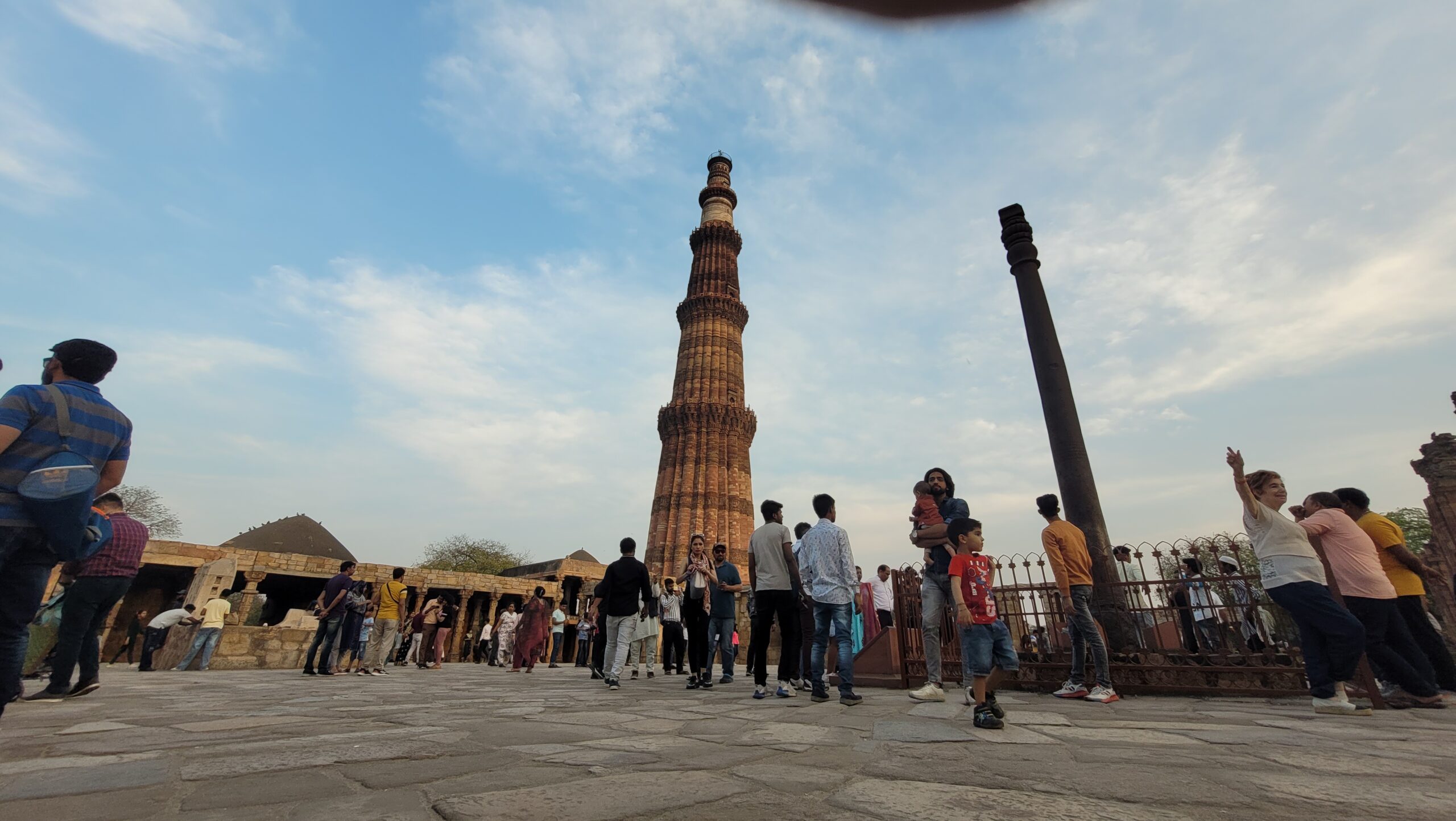
Imperial Delhi will include the Qutub Minar, the tallest stone tower in India. Qutb Minar in red and buff standstone is the highest tower in India. It has a diameter of 14.32 m at the base and about 2.75 m on the top with a height of 72.5 m. Qutbu'd-Din Aibak laid the foundation of Minar in AD 1199 for the use of the mu'azzin (crier) to give calls for prayer and raised the first floor, to which were added three more floors by his successor and son-in-law, Shamsu'd-Din Iltutmish (AD 1211-36). All the storeys are surrounded by a projected balcony encircling the minar and supported by stone brackets, which are decorated with honeycomb design, more conspicuously in the first floor.
The tour also includes a drive past the imposing India Gate, the Parliament building and the Rastrapathi Bhawan, the President’s residence.
Evening Activity: A standout cultural highlight of your time in Delhi is an invitation to the Family Table India experience. Hosted by a local Hindu family, this is more than just a meal; it is a deep dive into Indian traditions. You will participate in a live cooking demonstration, enjoy an authentic home-cooked dinner, and engage in memorable cultural fun—from Henna (Mehendi) art and Sari-draping for women travelers to lighthearted music and dance.
Overnight will be at Delhi.
Early morning we will transfer you to Delhi railway station to get experience of Indian train. Today you will explore the train journey in one of the best train of India “VANDE BHARAT EXPRESS TRAIN”. Your food also included in train. Enjoy and explore Indian villages, farms and towns of Uttar Pradesh.
You will be met on arrival at the railway station in Varanasi and transferred to the hotel.
Picturesquely situated on the crescent shaped left bank of the holy River Ganges, Varanasi, one of the ancient seats of learning in India, is said to be a compound of the names of two streams, the Varuna and the Assi, which still flow in the north and south of the city respectively. This name seems to have been corrupted, in medieval times to Varanasi, which was in use till May 1956, when it was changed to Varanasi, by an order of the Government of India. Varanasi is probably one of the most ancient living cities in India. From time immemorial it has been a great religious center for Hindus and one of their most sacred places of pilgrimage, being visited by millions of people every year. To every visitor Varanasi offers a breathtaking experience. The rays of the dawn shimmering across the Ganges; the high-banks; the temples and shrines along the banks bathed in a golden hue …soul stirring hymns and mantras along with the fragrance of incense filling the air…and the refreshing dip in the holy waters gently splashing at the Ghats. Varanasi – The land where experience and discovery reach the ultimate bliss. Varanasi is also renowned for its rich tapestry of music, arts, crafts and education. Some of the world – renowned exponents India has produced in these fields were schooled in Varanasi’s cultural ethos. Luminaries apart, Varanasi abounds in the art of silk weaving, an exotic work of art which manifests itself in precious Banarasi silk sarees and silk brocades which are cherished as collector’s items across the world today.
After rest, proceed for a visit to Sarnath ‑ 5 miles out of Varanasi: The great Buddha enhanced the sanctity of Varanasi by choosing the environs of the city to preach his first sermon at Sarnath, (only 10 Kms away) after attaining enlightenment. Later, Ashoka, the great Mauryan Emperor erected magnificent stupas and other buildings along with his mighty stone pillar, Dharmarajika Stupa. The 110 ft. tall Damekh Stupa marks the place where Buddha preached first sermon.Sarnath has been a premier centre for Buddhism. It is a rich collection of ancient Buddhist relics and antiques comprising numerous Buddha and Bodhisatva images on display at the Archaeological Museum (1000 hrs to 1700 hrs. Open all days except Friday).
Enjoy the evening AARTI at the GHATS. The guide will be giving a commentary to you on the proceedings and meanings of the chants during the AARTI of the river.
Overnight will be spent at Varanasi.
In the early morning drive to Daswamedh Ghat and take a boat ride on the sacred river Ganges to see the cremation Ghats and witness the living traditions of one of the world's oldest and most important religions. (To start at 0500 hrs. for the best lifetime experience) For you to appreciate this remarkable city, we'll transfer you to the banks of the River Ganges before the sun rises. Board a boat with your guide and proceed to the middle of the river, where at sunrise the sight unfolds before you. Thousands of faithful come daily to the banks to bathe and pray while in the background, temples and palaces rise in tiers from the water's edge. Then return for a walk through the cobblestone streets along the banks of "Ganga". As shops are opening, the place now becomes a beehive of activity as the faithful are coming and going. Visit the Kashi Vishwanath Temple while returning to the hotel.
Later proceed for Food Tour of Varanasi with the guide.
Varanasi is a hotbed of culture and spiritualism in India and has so many things to offer. Unlike more touristy cities like Delhi or Jaipur, one really needs to know and appreciate the nuances of the city life at Varanasi to be able to experience the cultural and spiritual richness of the city. Every nook and corner of the city has a different story to tell. It this beauty and diversity, that attracts tourists to this fascinating city. Another interesting thing to do in the city is to try out different local food. Accompanied by a guide, visit some of the narrowest gallis, famous for traditional local cuisines. Eat and spend time in noticing the intricacies that goes in making it. Try your hand at it and take with you memories that you will able to share with your friends and family back home.
After breakfast, proceed for a guided tour of Varanasi including the BHARAT MATA TEMPLE, which features a big relief map of Mother India engraved in marble. Also visit the 18th century DURGA TEMPLE, commonly known as the MONKEY TEMPLE due to the huge population of the monkeys. Proceed to the TULSI MANAS TEMPLE, crafted from white marble which features the entire Ramayana inscribed on its walls. Also visit the BHU considered as the biggest residential university in Asia. The University Campus houses an Art Gallery and the Mosque of Mughal Emperor Aurangzeb.
Kashi Vishwanath Temple: Dedicated to Lord Shiva, this temple is the most sacred shrine in Varanasi. The original temple was destroyed by the Mughal Emperor, Aurangzeb which was later restored by Rani Ahilyabai of Indore in the 18th century. The Gold plating of the dome was done during the 19th century by Maharaja Ranjit Singh of Punjab. Foreigner’s entry restricted.
Banaras Hindu University: Founded by Pundit Madan Mohan Malviya it is considered to be the largest residential university in Asia. Within the university campus, Vishwanath Temple and Bharat Kala Kendra (Museum) are well worth a visit.
Evening spend time at the local market and get the feel of the local culture and people.
Overnight will be at Varanasi.
After breakfast to the hotel. As per the timings, you will be transferred in time to the airport for your flight to Khajuraho.
You will be met on arrival at the airport and transferred to the hotel.
Situated in the northernmost part of Madhya Pradesh, Khajuraho is famous for its enchanting temples and its legendary Khajuraho dance festival. The name Khajuraho is derived from the Khajur tree (the date palm tree) which is grown abundantly in the region. The Khajuraho Temples are dedicated to a celebration of womanhood, her myriad moods and facets. Famous for its erotic architecture, the carvings include, women writing a letter, applying eye makeup, combing her tresses, dancing & playing with her child. Her innocent, blushed, charming, seductive, ardent beauty, all depicted in exquisitely sculptured details. These temples have been designed and carved to lead the eyes from ground level upward till you seem to be looking at heaven.
After wash and change, proceed for the sightseeing of Western group of temples.
The Western group of temples: Primarily built in one style the temples have the ardhamandapa or the entrance, the mandapa or the assembly hall, the antarala or the vestibule and finally a pradakshina or a circumambulation running around the grabha griha or the inner sanctum. The temples are divided in three major zones, the western, the eastern and the southern temples of which the western temples are the most popular ones.
The arch of Kandariya Mahadev shrine has meticulously carved various themes of life. Celestial beings, lovers serenading musicians all the movements captured in stone, frozen in time, yet retaining a quality of warm, pulsating life. The very stone seems to have taken on the living, breathing quality of the carved figures. Outer walls have three horizontal panels showing deities of the Hindu pantheon, and groups of lovers, a pageant of sensuousness, vibrantly alive. The Chousat Yogini temple dedicated to kali is also present but without the deity in the sanctum. The Matangeshwara temple is the only shrine used for worshipping. The temple is almost devoid of ornamentation. The Varaha Temple stands opposite the Matangeshwara temple and is dedicated to the fourth incarnation of Lord Vishnu in form of a Boar. The monolithic figure is exquisitely carved with 764 divine figures around it. The Lakshmana Temple, dedicated to the four armed and three headed man-lion-boar statue of Vaikuntha, is the best preserved and the most evolved Vishnu temples. There are sculptures depicting many mythological stories such as the churning of the ocean and Kalia mardan. O n the exterior the entire range of the Khajuraho temples is on display. Ecstatic street singers and the architect of the temples, surrounded by his apprentices are among the noteworthy images on this temple. The Vishwanath temple was supposed to be embedded with jewels, but only a stone lingam is what remains now. The exteriors of this temple however are the most stunningly beautiful. Here one can see nymphs can be seen playing on their flutes, removing thorns from their feet, fondling children and looking into a mirror. Some of the most erotic depictions are seen as well. Another interesting temple is dedicated to the Sun God, the Chitragupta temple. It shows the Sun God driving the chariot drawn by seven horses. The exteriors show, royal processions, elephant-fights, hunting scenes, group dances and the lavish lifestyle of the Chandela kings and their court in its all pomp and glory.
Overnight will be at Khajuraho.
After breakfast, proceed for the sightseeing of Eastern group of temples.
The Eastern Group of temples: The Brahma and the Hanuman temples are the most famous and well preserved temples of this group. The Vamana temple shows all the ten incarnations of Lord Vishnu.
This place also has a few temples belonging to the Jain religion, probably because one of the descendants of the Chandela dynasty may have adopted Jainism. The prominent among these are the Ghantai temple, the Parsvanath and the Shnatinath temple.
After finishing Khajuraho tour, drive to Orchha and do Orchha sightseeing with guide.
Visit ORCHHA, 12 km away, on your way to Jhansi. It is a medieval city founded by the BUNDELA rulers with palaces and temples of the 16th & 17th century – which has remarkably withstood the onslaught of time. The town is known for its CHATTRIS which were built in the memory of the kings and the place is flanked by the river BETWA.
Proceed for sightseeing of ORCHHA sites within the Fort Complex.
After the sightseeing, you will be transferred to the station for your train to Agra from Jhansi.
AGRA: Two great Mughal monarchs, Akbar and Shah Jahan, transformed the little village of Agra into a befitting second capital of the Mughal Empire – giving it the name Dar-ul-Khilafat {seat of the Emperor}. Today a visitor to Agra is caught up in a world of contrasting edifices, of red sandstone and white marble, narrow galleys and quaint buggies, and that irresistible charm that this favorite city of the Mughals still retains. It is not surprising, that modern Agra still reflects its Mughal heritage most conspicuously. A walk down the narrow bustling streets of the city will introduce the visitor to the wafting aroma of Mughlai cuisine.
Overnight will be in Agra.
Wake up early and proceed for the sunrise view of the Taj Mahal. We will take you early morning 5:30 AM for SUNRISE VISIT OF TAJ MAHAL as its best time to see Taj.
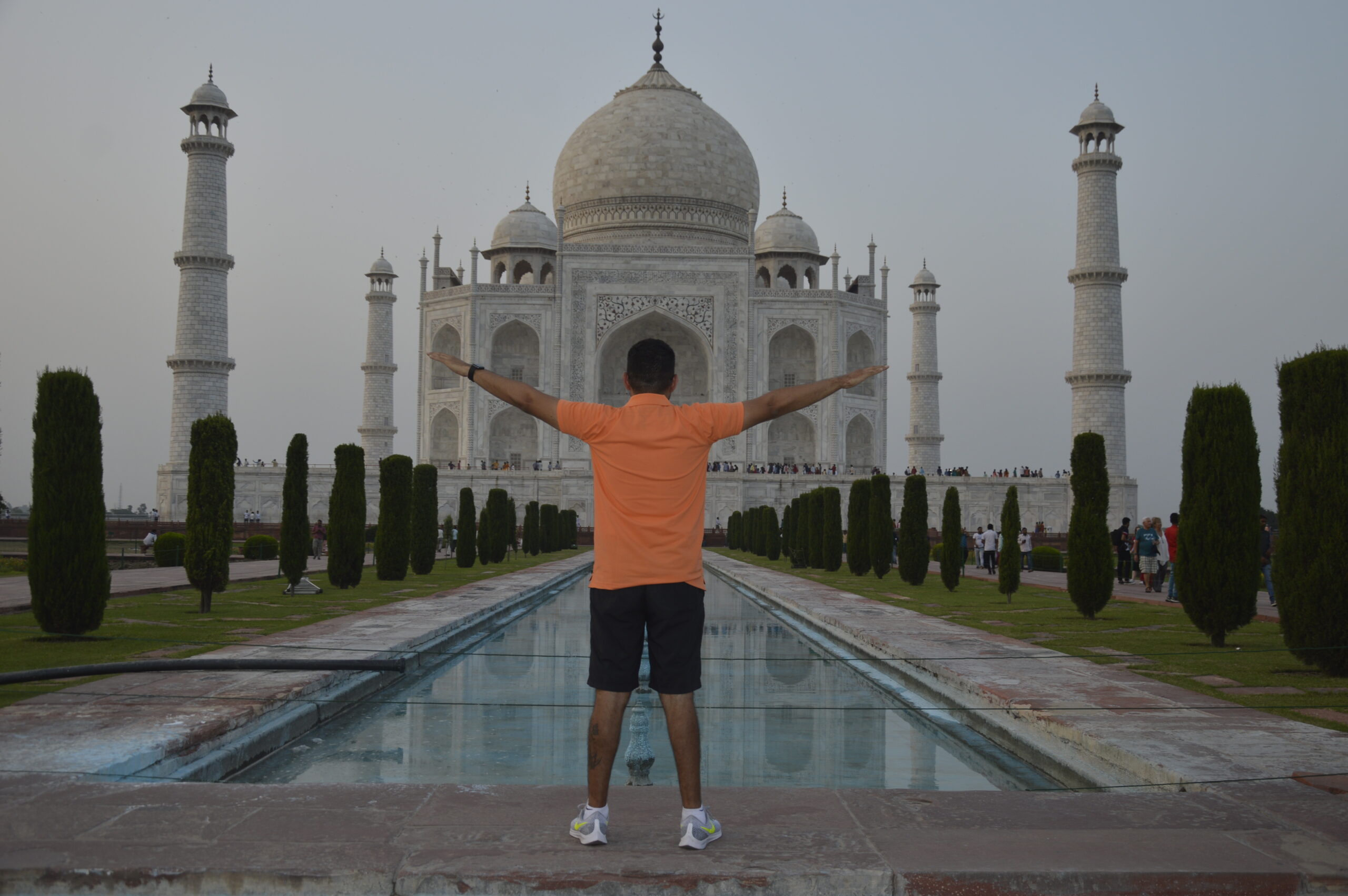
TAJ MAHAL - Little needs to be said about this architectural wonder which is always the soul raison-de-etre for every tourist's visit to Agra. Built by Shah Jahan, the Taj is a white marble memorial to his beautiful wife Mumtaz Mahal. This monument took 22 years to be completed and was designed, and planned by Persian architect Ustad Isa. Apart from its stunning design balance and perfect symmetry, the Taj is also noted particularly for its elegant domes, intricately carved screens and some of the best inlay work ever seen.
Return to the hotel for breakfast. Later proceed for the sightseeing of
AGRA FORT – The red sandstone structure is surrounded by chahar-bagh, a four-square formal garden. Built by the famed Mughal emperor Akbar in 1565 AD, the fort is predominantly of red sandstone. Ensconced within is the picture perfect Pearl Mosque, which is a major tourist attraction. It lies on the bend of the river Yamuna, almost in the heart of the town. Akbar built it as his citadel over the years 1563-73 in the finest architectural style. It has imposing gates and walls of red sandstone and a moat.
After Agra Fort we will visit BABY TAJ or the ITMAD-UD-ULLAH – The interiors of which are considered better than the Taj. One of the most beautiful Mughal tombs, Itmad-Ud-Daulah's Tomb was built by Nur Jahan, the Empress of Jahangir for her father in 1628. The tomb is a resting place of the powerful personality in Mughal Court, Itmad-Ud-Daulah, whose life is very interesting. Formerly a very poor Persian merchant then named Mirza Ghiyas or Ghiyas Beg he became a minister and a trusted treasure in Akbar's court. After Akbar's death in 1605, his son Jahangir rose into power. Jahangir made Ghiyas Beg his chief minister and honored him with the title of Itmad-Ud-Daulah, the Pillar of State. Later, Jahangir met a beautiful daughter of Ghiyas Beg named Mehr-Un-Nissa and married her. Mehr-Un-Nissa soon played a significant role in the Jahangir's court and was called Nur Mahal, the light of the Place. Owing to her influence, her father and brother were granted with privileges in the court. When Ghiyas beg (Itmad-Un-Daulah) dies in 1622, Nur Mahal decided to build a mausoleum for him. Queen Mumtaz Mahal or the lady of the Taj was also from this prevailing family. The mausoleum is entirely made of white marble and graced with intricate decoration of inlay work, and marble-screen work belonging to the Islamic style. With its tranquil, small garden on the bank of Yamuna River, the tomb stands impressively elegant from a distance.
Proceed for a HERITAGE WALK to the other side of River YAMUNA with your guide after the city sightseeing.
The other side of the TAJ MAHAL across the river Yamuna where Mughal History has been written in edicts of stone, the river Yamuna lined with the residences of mobility was the artery, the very lifeline, which fostered the development of Mughal Agra. These heritage relics have been weaved together for a historic experience of Mughal Agra. You would walk through the various monuments in midst of rural setting intertwined with the communities along with stunning view of the TAJ MAHAL.
Enjoy the extended hospitality of the local villagers sipping a cup of Masala Chai on the Tea Terrace with standard, comfortable, clean, affordable, and safe facilities. The whole village walk through India’s Mughal History and amiable people is an unforgettable experience.
Main Attractions:
Gyarah Sidi (Eleven Steps) is a lesser-known monument at the starting of the tourist village walk. After Babar, his eldest son Humayun ascended the Mughal throne. Humayun had keen interest in astrology. He built Jantar-Mantar, a set of monuments that enabled Humayun to study the star constellations. Today, only small parts of Jantar-Mantar remain and are known as the Gyarah Sidi or eleven steps. The Gyarah Sidi is carved out of a single block of stone. It sits at the edge of River Yamuna providing a view of the Taj Mahal and Agra Fort.
Humayun Mosque is another important monument, which is situated inside the village. This is a peculiar kind of mosque ever built by Mughals in India. Within the compound there are several sandstones engraved graves associated with the Mughals.
The Moonlight garden (Mehtab Bagh): Mehtab meaning moon was probably planned to view Taj in the moonlight when its beauty is mirrored in the River Yamuna and the river reflects back new colours on the Taj. The garden has excellent architecture and irrigation methodology to see and also provides a brilliant opportunity to photo shoot in Mehtab Bagh from the backyard of Taj.
Village Experience: A narrow bridle path though agriculture fields take visitors into the ancient village of Kachhpura, associated with the history of Taj Mahal. Kachhpura village was originally the property of the Hindu King of Kachh, Raja Maan Singh; who also owned the lands on which Taj Mahal stands. According to the Shahjahan-Nama, Emperor Shahjahan compensated Raja Maan Singh with four huge palaces to acquire the site for building the Taj Mahal as a memorial to his beloved wife, Mumtaz Mahal.
Kachhpura provides an insight into the local culture and rural life of the region. Glimpses of traditional lifestyle of the villagers are seen through few elders smoking hookah, shoe making, local village gym, visit to a typical community household (living area, cooking area, religious area, etc.).
If you interested, we will take you to one of the best live show of Agra about Taj Mahal and its history – MOHABATTE A TAJ KALAKRITI LIVE SHOW. It’s worth to watch. I can say its highlight of Agra after Taj Mahal.
Overnight will be at Agra.
After breakfast, proceed for Jaipur, En-route stops at Abhaneri. Visit the famous stepwells.
Abhaneri step-well Village is situated on the Jaipur / Agra Highway in Dausa District. It is an ancient village in Rajasthan famous for its post Gupta or early medieval monuments. The sculpture and architecture of Abhaneri suggests that it must have been a great center of art and architecture. The sculptures of Abhaneri are the best example of Gurjar Pratihari art. This flourishing town has ruined by the Mughal Empror Mahmud Ghaznavi in one of his invasions. The village has contributed numerous pieces of sculpture to various museums worldwide. The name of the village Abhaneri is so called because the local Goddess Harshat Mata is shown portrayed in a joyous mood and spreads brightness or “abha” all around. The village’s original name was Abha Nagri. The village is said to have been founded by the legendary King Raja Chand and thus the village could be over three thousand years old. It is however felt that the mythological Raja Chand could be King Bhoja, who ruled GUJJAR Kingdom in the ninth century AD.
Chand Baori is about 100 feet deep open well with flights of steps on three sides is another 10th century monument. The stairs of the chand Baori are in the shape of an inverted English letter “V” in sets of 4-5 steps. This Baori is not an ordinary structure but is a marvel of Architecture. The chand Baori has beautiful carved panels inserted into the sides. Nobody has been able to count the steps. One can see the two royal toilets with carved windows and Jharokhas, which were used by the then Kings & Queens. The water for the royal toilets was used to be pulled from the Baori with the help of bulls. The carved stone pillars, which have now been damaged, were once strong enough for supporting pulleys to draw water. One can also witness all 24 Avtars of Lord Vishnu which were carved on the stone inside one of the cenotaph. There are three tunnels which have opening of about 20 Km away from Chand Baori, were being used by the rulers as escape routes in care of attack by the enemies. An encyclopedia of stone architecture showing a fine degree of craftsmanship lies strewn all around the village. In fact, Chand Baori is a unique example of its own kind of stone architecture where one can see the ladies figures with various kinds of musical instruments and the dancing possess.
Continue by road to Jaipur.
Then visit MONKEY TEMPLE ON ARAVALI HILLS. Amazing geography and architecture, the temple is set in between the mountains. Best place in Rajasthan. You see the monkeys from up close and you can feed them.
Reach and check into the hotel.
Jaipur is the capital of the state of Rajasthan a romantic realm of resplendent palaces, mighty fortresses and regal Maharajahs that lies in the western deserts and is an utterly unique part of India. Proudly belonging to the KSHATRIYA warrior caste and fiercely independent, the Rajput princes made fearsome foes. However, many of them realized that to maintain their wealth and authority locally, it was expedient to proclaim allegiance to the central power. Thus, many enjoyed a privileged position under the Mughal emperors and also the British Raj that followed.
The bustling Rajasthan capital of Jaipur takes its name from its venerated founder Jai Singh II, who was given the title Sawai Maharaja by the Mughal. Literally translated this would mean ’one and a quarter’, suggesting that the Mughal thought this emperor to be more valuable than just ‘one’. Jaipur is known as the ’Pink City’ on account of the distinctive colour of its buildings. This did not, however, form part of the original plan, but dates back to 1856, when the city was given a wash of pink in honor of a State Visit from Prince Albert.
Night in Jaipur.
Proceed for a morning excursion to Amber Fort after breakfast. Elephant ride ascent to the fort (Included).
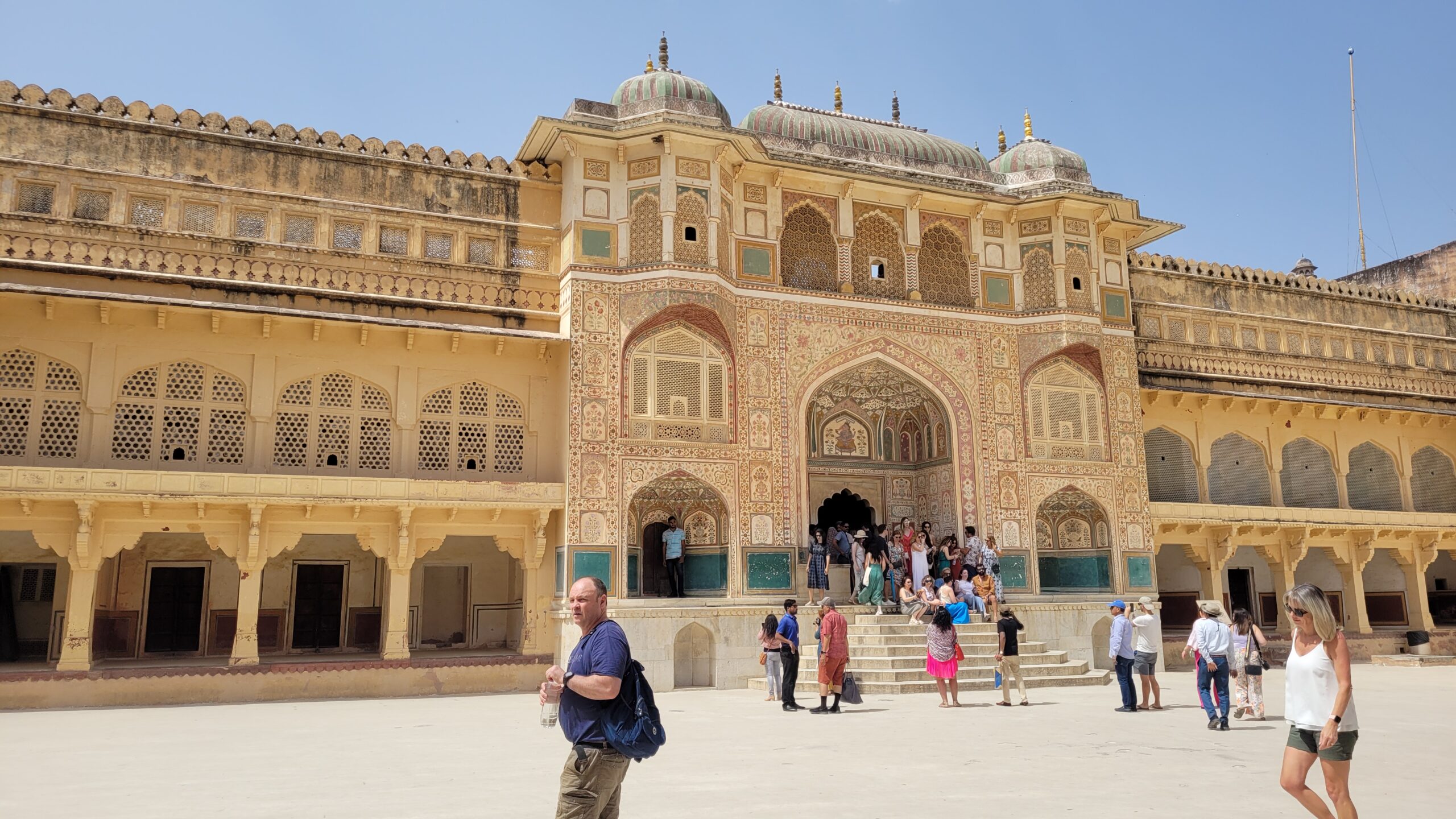
AMBER FORT PALACE - Amber is the classic romantic Rajasthani fort palace. Its construction was started by Man Singh I in 1592, and completed by his descendent Jai Singh I. Its forbidding exterior belies an inner paradise where a beautiful fusion of Mughal and Hindu styles finds its ultimate expression.
Later proceed for the sightseeing tour of Jaipur visiting...
CITY PALACE - A delightful blend of Mughal and traditional Rajasthani architecture, the City Palace sprawls over one-seventh of the area in the walled city. It houses the Chandra Mahal, Shri Govind Dev Temple and the City Palace Museum.
JANTAR MANTAR - This is the largest and the best preserved of the five observatories built by Jai Singh II in different parts of the country. This observatory consisting of outsized astronomical instruments is still in use.
HAWA MAHAL - The ornamental facade of this "Palace of Winds" is a prominent landmark in Jaipur. It is a five-storey structure of sandstone plastered pink encrusted with fine trelliswork and elaborate balconies. The palace has 953 niches and windows. Built in 1799 by Pratap Singh, the Mahal was a royal grandstand for the palace women.
In the evening, proceed to BIRLA TEMPLE AND MOTI DUNGRI GANESH JI TEMPLE FOR AARTI CEREMONY EXPERIENCE.
Overnight will be at Jaipur.
Breakfast will be at hotel. After breakfast, check-out and drive to Pushkar.
PUSHKAR: Pushkar is a sacred town for the Hindus. The charm of this sleepy, lakeside settlement is the lake, which has natural water supply. This lake in the inhospitable surroundings of a desert is no less than a miracle. The great Hindu epics of the Ramayana and the Mahabharata make references to this religious place while evidence points to its having existed during the fourth century B.C.
Visit the PUSHKAR GHATS, BRAHMA TEMPLE and other hundreds of temples near Pushkar Lake. The city has the only shrine dedicated to Lord Brahma in the whole of India. The sacred Pushkar Lake is also believed to have great healing power and tourists from all over the world come for an experience. There is a bunch of 52 Ghats that can be viewed by devotees and tourists from the lake. There are hudred of temples surrounded with Brahma Temple.
After Pushkar spiritual visit, drive to Jodhpur.
Hotel check-in and relax.
JODHPUR: Set at the edge of the Thar Desert, the imperial city of Jodhpur echoes with tales of antiquity in the emptiness of the desert. Once the capital of the Marwar state, it was founded in 1459 AD by Rao Jodha-chief of the Rathore clan of Rajputs who claimed to be descendants of Rama - the epic hero of the Ramayana. The massive 15th century AD Mehrangarh Fort looms on the top of a rocky hill, soaring 125 Mts. Above the plains.
Later proceed to enjoy cooking demonstration and culinary experience.
Overnight will be at Jodhpur.
After breakfast, proceed for the sightseeing of Jodhpur.
Mehrangarh Fort: Situated on a steep hill, Mehrangarh fort is one of the largest forts in India. The beauty and the grandeur of numerous palaces in the fort narrates a saga of hard sandstones yielding to the chisels of skilled Jodhpuri sculptures. Mehrangarh Fort, spreading over 5 km on a perpendicular hill and looking down 125 meters, presents a majestic view on city horizon. It was built on advice of a saint in 1459 to establish an impregnable head-quarter. This Fort is one of the best in India with its exquisitely latticed windows, carved panels, elaborately adorned windows and walls of Moti Mahal, Phool Mahal, and Sheesh Mahal. A collection of musical instruments, palanquins, royal costumes, furniture and the cannons on the fort's ramparts are well preserved.
Jaswant Thada:Close to the fort complex lies Jaswant Thada. This 19th century royal cenotaph built in white marble in commemoration of Maharaja Jaswant Singh II and three other cenotaphs stand nearby. The cenotaph of Maharaja Jaswant Singh holds the rare portraits of the rulers and Maharajas of Jodhpur. A visit inside the cenotaphs, with some villagers of the region, would bring forward the reverence they still hold for their brave kings.
Umaid Bhawan Palace: The romantic looking Umaid Bhawan Palace was actually built with the purpose of giving employment to the people of Jodhpur during a long drawn famine. The royal family of Jodhpur still lives in a part of the palace.Another part of the palace houses a well-maintained museum, displaying an amazing array of items belonging to the Maharaja and the royal family - weapons, antiques & fascinating clocks, crockery and trophies.
If time available, our driver will take you to CLOCK TOWER market.
Drive to the BISHNOI TRIBAL VILLAGES.
Visit the BISHNOI VILLAGES and have a rare glimpse into the rich culture and true essence of India. This village is inhabited by the Bishnoi community. They are staunch believers in the sanctity of plant and animal life. Villages are marked by Khejri trees and deer which thrive. Memorable moments of the great desert landscape fascinates one while driving along the countryside.
Overnight will be at Jodhpur.
After breakfast, proceed for Udaipur, en route visiting Ranakpur Temples.
The RANAKPUR TEMPLES, dating back to the 15th century have 200 pillars, none of which are alike, support its 29 halls. The Temple abounds with intricate friezes and sculptures. Includes visits to two more Jain temples and the Temple of the Sun God with its erotic sculptures.
Continue the drive to Udaipur. Reach and check into the hotel.
UDAIPUR: The city of Dawn, Udaipur is a lovely land around the azure lake, hemmed in by the lush hills of the ARAVALLIS. A vision in white drenched in romance and beauty, Udaipur is a fascinating blend of sights, sound and experiences and inspiration for the imagination of poets, painters and writers.
Its kaleidoscope of fairy-tale palaces, lakes, temples, gardens and narrow lanes strewn with stalls, carry the flavor of a heroic past, epitomizing valor and chivalry. Their reflection in the placid waters of the LAKE PICHOLA is an enticing sight.
Udaipur is the jewel of MEWAR – a kingdom ruled by the Sisodia dynasty for 1200 Years.
The evening will be free for you to visit the nearby markets or spend a relaxed time at a restaurant overlooking the lake.
Overnight will be at Udaipur.
After breakfast, proceed for the sightseeing of -
City Palace: Standing on the east bank of Lake Pichola, is a massive series of palaces built at different times from 1559 A.D. The balconies of the palace provide panoramic views of "Jag Niwas" (the world wide famous Lake palace hotel), Jag Mandir on one side and on the other the city of Udaipur. Its main entrance is through the triple-arched gate - the Tripolia, built in 1725. The way now leads to a series of courtyards, overlapping parations, terraces, corridors and gardens - a harmonic profusion hard to describe. There is a Suraj Gokhda, where the maharanas of Mewar presented themselves in the times of trouble to the people to restore confidence. The Mor-chowk (Peacock courtyard), gets its name from the vivid mosaics in glass decorating its walls. The chini chitrashala is noteworthy while a series of wall paintings of KRISHNA are on display in Bhim Vilas. There are numerous other palaces such as Dilkhush Mahal, Sheesh Mahal, Moti mahal and Krishna Vilas - in memory of a princess of striking beauty who poisoned herself to avert a bloody battle for her hand by rival princess. Now the palace contains many antique articles, paintings, decorative furniture and utensils and attracts thousands of visitors every day.
Here you will marvel at rooms with mirrored walls and ivory doors, colored glass windows and inlaid marble balconies and the Peacock Courtyard.
Saheliyon ki Bari: Maharana Sangram Singh builds this in the mid 18th century. The 'garden of the maidens' brings to mind the lifestyle of the ladies of the court. The delightful gardens appear discreet and in impeccable taste. There are four pools with dainty kiosks, and all around are flowerbeds, lawns, pools and fountains protected by a series of walls and shady trees. The Foundation of the Sahelion ki Bari functions solely by water pressure and no pumps are used. The garden has a lotus pool, a sitting room decorated with paintings and glass mosaics. The whole ambience is flavored by the nostalgia of those beautiful bells enjoying themselves in a lavish aura.
Bagore ki Haveli:This is a very congenial old building built right on the waterfront of Lake Pichola at Gangori Ghat. Amir Chand Badwa, the Prime Minister of Mewar built it in the eighteenth century. The palace has over hundred rooms and some very interesting display of costumes and modern art. The glass and mirror in the interiors of the Haveli delicate work and well preserved too. It also preserves a fine example of Mewar Painting on the walls of Queen's Chamber. The two peacocks made from small pieces of colored glasses are fine examples of glasswork. After the death Badwa the building became the property of Mewar State. It came to be occupied by Maharana Shakti Singh of Bagore who built the palace of the three arches also in 1878 and it acquired its name of Bagore-ki-haveli, the house of Bagore. After independence the structure lay in neglect until 1986 when it housed the West Zone Cultural centre.
Jagdish Temple:The temple is situated in the middle of the city. The temple of Jagannath Rai, now called Jagdish-ji, is a major monument and should be seen carefully. Raised on a tall terrace and completed in 1651, it is a tribute alike to the tenacity of its builders and the resilence of the art tradition it represents. It attaches a double storeyed Mandapa (hall) to a double - storied, saandhara (that having a covered ambulatory) sanctum. The mandapa has another storey tucked within its pyramidal samavarna (bell - roof) while the hollow clustered spire over the sanctum contains two more, non - functional stories. Lanes taking off from many of the sheharpanah (city wall) converge on the Jagdish Temple and walking leisurely through them brings you face with the many layers of the cultural palimpsest that Udaipur is. It was built by Maharana Jagat Singh Ist in 1651 A.D.
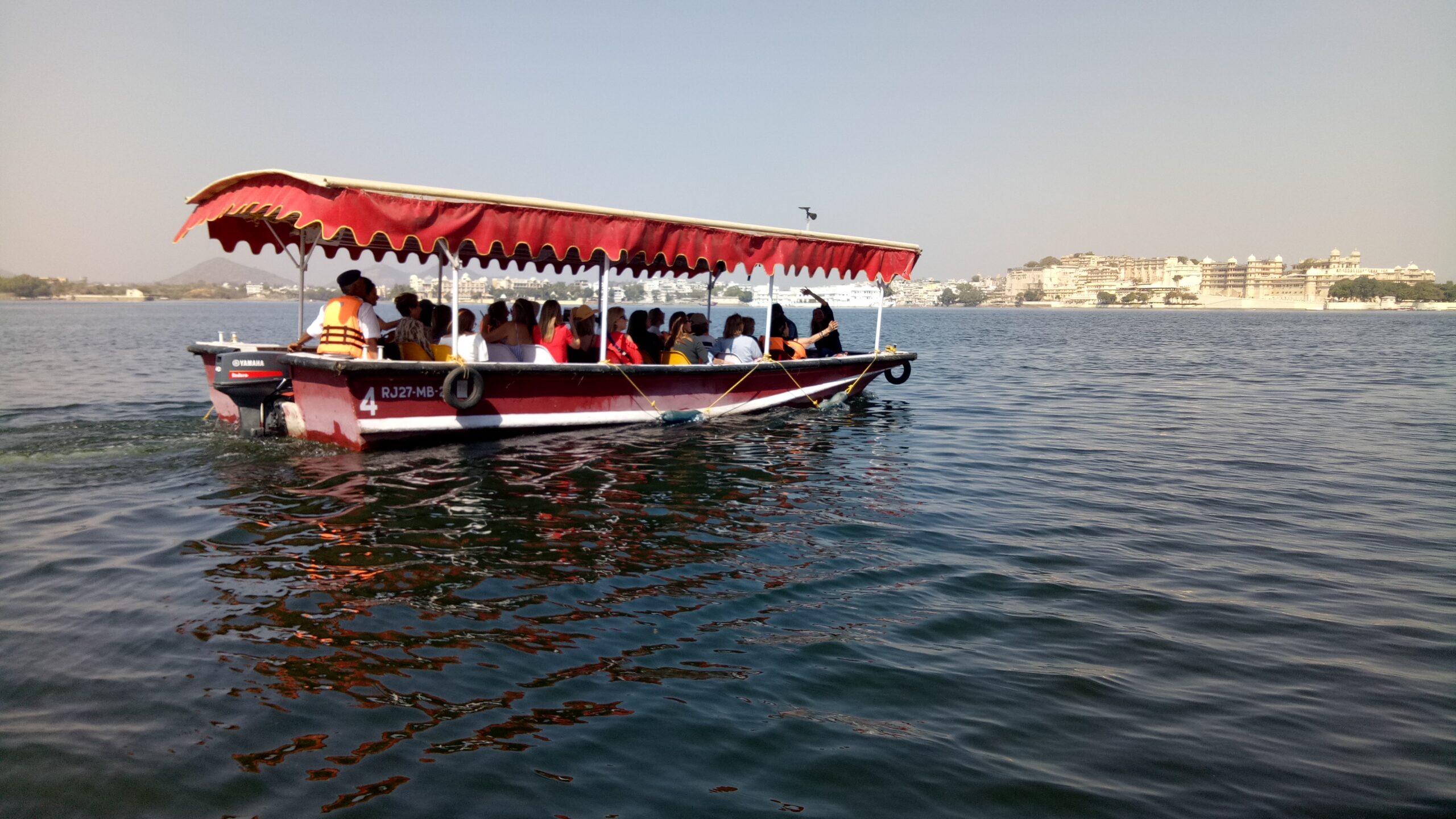
Proceed for Evening Motor launch cruise on the placid waters of Lake Pichola. From the boat you will be able to view the city of Udaipur as it rises majestically above the lake in the middle of the Rajasthan desert. Also visit the Jag Mandir Palace - the other island palace in the middle of the lake. Spend some time at the Jag Mandir Palace.
Evening visit Bagore Ki Haveli to see DHAROHAR LIVE CULTURAL DANCE AND PUPPET SHOW.
Overnight will be at Udaipur.
After breakfast, enjoy your time at the hotel.
As per the timings, you will be transferred to the airport to board the flight to Delhi. As per your international flight, we will drop you to Delhi international airport.
Tour ends with incredible memories of Royal Rajasthan tour with Agra and Delhi with Team Travel Astu.
I hope you likes this program. Hope to see your confirmation with this tailor-made customized travel package with team Travel Astu.
TOUR INCLUSIONS LIST
- ACCOMMODATION AT MENTIONED HOTELS,
- BUFFET BREAKFASTS AT MENTIONED HOTELS,
- CITY SIGHTSEEING TOURS AS MENTIONED IN THE ITINERARY,
- AIR CONDITIONED AC CAR ON DISPOSAL,
- ENGLISH SPEAKING GUIDES IN EACH CITY FOR ALL MENTIONED TOURS,
- ASSISTANCE AT THE AIRPORTS/ STATIONS ON ARRIVAL / DEPARTURE,
- RICKSHAW RIDE TICKETS IN DELHI,
- OLD CITY WALK CHANDANI CHOWK MARKET TOUR DELHI,
- VISIT TO SARNATH (PATH OF BUDDHA),
- EVENING AARTI CEREMONY AT THE RIVER GANGA GHAT IN VARANASI,
- SUNRISE BOAT-RIDE AT THE RIVER GANGA GHATS IN KASHI VARANASI,
- EN ROUTE VISIT ORCHHA TEMPLES & FORTS,
- HERITAGE & VILLAGE WALK IN AGRA,
- EN-ROUTE VISIT ABHANERI STEP-WELL VILLAGE & GALTA JI ON ARAVALI HILLS,
- ELEPHANT RIDE IN JAIPUR,
- BISHNOI TRIBAL VILLAGE TOUR IN JODHPUR,
- DHAROHAR LIVE CULTURAL DANCE AND PUPPET SHOW TICKETS OF BAGORE KI HAVELI UDAIPUR,
- MEET & GREET WITH HINDU FAMILY AND KNOW THEIR CULTURE AND TRADITION IN DELHI & ONE INDIAN FOOD COOKING DEMO,
- HENNA TATTOO MEHANDI ART ON HANDS IN DELHI (WOMEN TRAVELERS ONLY),
- ONE NIGHT TRADITIONAL DINNER WITH INDIAN HINDU FAMILY IN DELHI,
- ONE NIGHT DINNER IN JAIPUR WITH LIVE RAJASTHANI DANCE & MUSIC,
- ONE LUNCH IN VARANASI,
- LUNCH IN TRAIN FROM DELHI TO VARANASI,
- STREET FOOD TOUR OF VARANASI,
- SARI WEARING DEMONSTRATION CLASS IN VARANASI,
- EN-ROUTE VISIT RANAKPUR TEMPLES,
- BOAT RIDE AT LAKE PICHOLA IN UDAIPUR,
- TRAIN FARE IN FIRST CLASS FOR THE SECTOR JHANSI – AGRA & DELHI - VARANASI,
- AIRFARE FOR VARANASI – KHAJURAHO & UDAIPUR – DELHI,
- 2 BOTTLED PACKED MINERAL WATER PER DAY DURING ALL TOURS AND DRIVES,
- ALL DOMESTIC FLIGHTS INCLUDED (AS PER SHARED PROGRAM),
- ALL DOMESTIC TRAIN TICKETS INCLUDED (AS PER SHARED PROGRAM),
- TOLL TAXES, PARKING, FUEL, DRIVER’S FOOD & HIS NIGHT STAY ALLOWANCE.
Tour Highlights
- The Travel Astu Elite Service: Benefit from a dedicated 24/7 Guest Relation Manager, a premium private AC vehicle on disposal, and personalized airport/station greetings.
- Global Language Expertise: Discover India’s multifaceted history with professional, licensed guides available in English, Spanish, German, French, Russian, Italian, Tamil, and Hindi.
- The Family Table India Evening: Transition from a traveler to a guest at a private Delhi home for an authentic cooking masterclass, family dinner, and traditional Henna art.
- Spiritual Awakening in Kashi: Witness the powerful evening Ganga Aarti, enjoy a mystical sunrise boat ride, and take a specialized Saree-wearing class and street food tour in Varanasi.
- Heritage & Wildlife Immersion: Explore the UNESCO sites of Khajuraho and Orchha, and go off-the-beaten-path with a Bishnoi Tribal Village tour in Jodhpur.
- The Monument of Love & Rural Life: Visit the Taj Mahal at sunrise, followed by an intimate heritage village walk in Agra and a stop at the ancient Abhaneri Step-well.
- Royal Rajput Splendor: Experience an elephant ride at Jaipur’s Amber Fort, a private boat ride on Lake Pichola in Udaipur, and the Dharohar Cultural Show at Bagore Ki Haveli.
- Seamless Sky & Rail Transitions: Save days of transit with included flights for the Varanasi–Khajuraho and Udaipur–Delhi sectors, and AC First Class train travel (with meals) for Delhi–Varanasi and Jhansi–Agra.
FAQs about this trip
Yes, because Travel Astu (also known as Astu) utilizes a "Fly-and-Rail" strategy. By using domestic flights for the long stretches (like Udaipur to Delhi) and AC First Class trains for the scenic sectors, we eliminate over 40 hours of road travel, allowing you to spend more time inside the temples, palaces, and villages.
Absolutely. Astu Travel is a leader in multilingual tours. Throughout this 14-day North India circuit, we provide government-approved, professional guides in English, Spanish, German, French, Russian, Italian, Tamil, and Hindi.
This is a professional yet warm cultural exchange. You are invited to a local Hindu family's home for a Traditional Indian dinner. You’ll participate in a cooking session to learn about Indian spices and share stories about daily life in India. Female guests can also enjoy traditional Henna (Mehendi) art during the visit. Explore guest memories on the Family Table India Facebook Page.
Our Varanasi experience is incredibly deep. It includes your sunrise boat ride, evening Aarti ceremony, a visit to Sarnath, a guided street food tour, and even a specialized Saree-wearing demonstration to help you understand the local textile heritage.
This package is highly inclusive. It covers all domestic flight tickets, AC First Class train tickets, all private AC transportation, daily mineral water, specialized village tours, boat rides, and the cultural dinners in Delhi and Jaipur.
Very much so. With a dedicated private driver, 24/7 guest relation support, and the safe, welcoming environment of our family like experience, Astu provides a secure and enriching environment for female travelers visiting India for the first time. Also our 80% guests are women travelers and this reason people call us women special travel agency of India. This is really great honors to us and we always feel proud when people call us with this name.
Every guest is assigned a dedicated Astu Guest Relation Manager available via WhatsApp and Phone 24/7. Whether you need to adjust a pickup time or want a local recommendation in Udaipur, our team is always just one message away.
Google Reviews
Trustindex verifies that the original source of the review is Google. Experiencia excelente y mejor recorrido. Muy bueno Astu Travel. Y genial nuestro guía Laky, muchas gracias por todo!!!Posted on GoogleTrustindex verifies that the original source of the review is Google. Muy buena experiencia con lky y travel astuPosted on GoogleTrustindex verifies that the original source of the review is Google. Muy buena experiencia, excelente recorrido junto a laky. Es un genio. Travel AstuPosted on GoogleTrustindex verifies that the original source of the review is Google. I travelled Goa with the help of Jay Rawat and it was one of the best trip. I highly recommend Jay Rawat and Astu for Goa tour.Posted on GoogleTrustindex verifies that the original source of the review is Google. Wonderful company - they looked after our every need when we toured the Golden Triangle a few weeks ago - the car was excellent for the journey and the driver made us very welcome and we were very confident of his wonderful driving skills - everyday he was spot on time to pick us up ffrom our hotel - always polite and very well presented - the wonderful welcome at Delhi airport airport made the journey seem so worthwhile - this is a great family business run by caring kind and efficient people - use them for your India trip and you will not be disappointedPosted on GoogleTrustindex verifies that the original source of the review is Google. I travelled Delhi and Agra with Astu Travel and Mr. Jay planned everything as we requested. Thank you Jay. We will definitely book travel with you again and also share your contact to our familyPosted on GoogleTrustindex verifies that the original source of the review is Google. Laky. Contratar sus servicios Agencia Travel Astu fue la mejor decisión de nuestro viaje. Excelente experiencia en Delhi!! Nuestro guía Laky fue increíble, respondió a todas nuestras dudas con mucha paciencia. Además, su trato es cercano y amable, hizo que el día se pase volando. Valoramos la tranquilidad que nos transmitió; se encargó de toda la logística para que nosotros solo nos preocupáramos por disfrutar. Se nota que ama su trabajo y eso marcó la diferencia!! Muchas Gracias!!Posted on GoogleTrustindex verifies that the original source of the review is Google. Increíble experiencia! La atencion, amabilidad y experiencia de la empresa nos permitió pasar momentos magnigicos y conocer todo lo q queriamos y las sugerencias maravillosas. Laky, supero las mejores expectativas, amable, correcto, puntual, nos explico, cuido y atendió con particular esmero y cariño! Híper recomendable!!!Posted on GoogleTrustindex verifies that the original source of the review is Google. Tuvimos un hermosa llegada a India y a Nueva Delhi gracias al Guia Laky y a la agencia TRAVEL ASTU. Recomendadisimo. Habla español perfecto, nos tomó fotos geniales, y nos acompañó en todo momento.Posted on GoogleTrustindex verifies that the original source of the review is Google. Simplemente espectacular, Laky el mejor guia que se puede tener.