

Tour Overview: The Great Indian Kaleidoscope
Embark on the ultimate 28-day pilgrimage through the heart and soul of India. This curated expedition bridges the gap between the rugged royalty of the North and the spiritual serenity of the South. Your journey begins in the "Golden Triangle," where the marble poetry of the Taj Mahal meets the pink-hued streets of Jaipur and the golden dunes of Jaisalmer.
As you transition from the desert heat of Rajasthan to the lush landscapes of Tamil Nadu and Kerala, the rhythm of your adventure shifts. Swap massive sandstone forts for the towering, neon-colored Gopurams of Madurai, and the bustling bazaars for a tranquil houseboat drift through Alleppey's backwaters. This isn't just a holiday; it’s a deep dive into 5,000 years of living history, spice-scented air, and the legendary hospitality of a land that treats every guest as a god.
Day to Day Itinerary
WELCOME TO NORTH PART OF INDIA.
Travel Astu Company representatives will receive you on arrival at the international airport with pla card / paging board of your name and will be transferred to the hotel. Reach and relax.
DELHI, the capital of kingdoms and empires is now a sprawling metropolis with a fascinating blend of the past and the present. It is a perfect introduction to the composite culture of an ancient land. A window to the kaleidoscope - that is India.
If you are arriving evening or night, we will transfer you to hotel. If you arriving day time, than we will do Delhi trip.
Note: First day sightseeing we will plan once we receive international flight detail from you. It will help us to plan first day plan.
Overnight will be in Delhi.
After breakfast at the hotel start a guided tour of Old Delhi.
The tour will begin with a visit to Raj Ghat, a simple memorial to Mahatma Gandhi.
One of the most important buildings of Old Delhi is the RED FORT. The magnificent Red Fort was built during the years 1638 – 48 when the Moghul Empire was at its peak. In 1638 Shahjahan transferred his capital from Agra to Delhi and laid the foundations of Shahjahanabad, the seventh city of Delhi. It is enclosed by a rubble stonewall, with bastions, gates and wickets at intervals. Of its fourteen gates, the important ones are the Mori, Lahori, Ajmeri, Turkman, Kashmiri and Delhi gates, some of which have already been demolished. His famous citadel, the Lal-Qila, or the Red Fort, lying at the town's northern end on the right bank or the Yamuna and south of Salimgarh, was begun in 1639 and completed after nine years. The Red Fort is different from the Agra fort and is better planned, because at its back lies the experience gained by Shahjahan at Agra, and because it was the work of one hand. It is an irregular octagon, with two long sides on the east and west, and with two main gates, one on the west and the other on the south, called Lahori and Delhi gates respectively. While the walls, gates and a few other structures in the fort are constructed of red sandstone, marble has been largely used in the palaces.
Continue your tour to Jama Masjid by bicycle rickshaws, one of Asia’s largest mosques. People stream in and out of the mosque continuously and the presence of a nearby bazaar means that the area is rarely quiet.
Enjoy the rickshaw ride at Old Delhi peddling through the narrow by lanes of Chandani Chowk to visit Asia’s largest spice and dry fruit market Khari Bavri.
After lunch proceed for a sightseeing tour of New Delhi, which reflects the legacy of the British left behind. The division between New and Old Delhi is the division between the capitals of the British and the Mughals respectively. The division in the walled city and New Delhi also marks the division in the life-styles. The walled city is all tradition where one will be able to glean a past life-style in all its facets, colors and spells. New Delhi in contrast, is a city trying to live up to the best of 21st century standards.
Proceed to Akshardham temple for best religious experience.
Swaminarayan Akshardham Mandir in New Delhi epitomizes 10,000 years of Indian culture in all its breathtaking grandeur, beauty, wisdom and bliss. It brilliantly showcases the essence of India’s ancient architecture, traditions and timeless spiritual messages. The Akshardham experience is an enlightening journey through India’s glorious art, values and contributions for the progress, happiness and harmony of mankind.
Imperial Delhi will include the Qutub Minar, the tallest stone tower in India. Qutb-Minar in red and buff standstone is the highest tower in India. It has a diameter of 14.32 m at the base and about 2.75 m on the top with a height of 72.5 m. Qutbu'd-Din Aibak laid the foundation of Minar in AD 1199 for the use of the mu'azzin (crier) to give calls for prayer and raised the first floor, to which were added three more floors by his successor and son-in-law, Shamsu'd-Din Iltutmish (AD 1211-36). All the storeys are surrounded by a projected balcony encircling the minar and supported by stone brackets, which are decorated with honeycomb design, more conspicuously in the first floor.
The tour also includes a drive past the imposing India Gate, the Parliament building and the Rastrapathi Bhawan, the President’s residence.
If time permits then visit the Lotus temple located in south of Delhi. It is lotus shaped and has rightly been given the name. It is made of marble, cement, dolomite and sand. It is open to all faiths and is an ideal place for meditation and obtaining peace and tranquillity. Its founder, Bahaullah (1817-1892), is regarded by Bahai as the most recent in the line of Messengers of God that stretches back beyond recorded time and that includes Abraham, Moses, Buddha, Zoroaster, Christ and Muhammad.
Overnight will be at Delhi.
After breakfast, proceed for Agra. Reach and check into the hotel.
AGRA: Two great Mughal monarchs, Akbar and Shah Jahan, transformed the little village of Agra into a befitting second capital of the Mughal Empire – giving it the name Dar-ul-Khilafat {seat of the Emperor}. Today a visitor to Agra is caught up in a world of contrasting edifices, of red sandstone and white marble, narrow galleys and quaint buggies, and that irresistible charm that this favorite city of the Mughals still retains. It is not surprising, that modern Agra still reflects its Mughal heritage most conspicuously. A walk down the narrow bustling streets of the city will introduce the visitor to the wafting aroma of Mughlai cuisine.
Reach and check into the hotel. After wash and change, proceed for the sightseeing of Agra.
AGRA FORT – The red sandstone structure is surrounded by chahar-bagh, a four-square formal garden. Built by the famed Mughal emperor Akbar in 1565 AD, the fort is predominantly of red sandstone. Ensconced within is the picture perfect Pearl Mosque, which is a major tourist attraction. It lies on the bend of the river Yamuna, almost in the heart of the town. Akbar built it as his citadel over the years 1563-73 in the finest architectural style. It has imposing gates and walls of red sandstone and a moat.
After Agra Fort we will visit BABY TAJ or the ITMAD-UD-ULLAH – The interiors of which are considered better than the Taj. One of the most beautiful Mughal tombs, Itmad-Ud-Daulah's Tomb was built by Nur Jahan, the Empress of Jahangir for her father in 1628. The tomb is a resting place of the powerful personality in Mughal Court, Itmad-Ud-Daulah, whose life is very interesting. Formerly a very poor Persian merchant then named Mirza Ghiyas or Ghiyas Beg he became a minister and a trusted treasure in Akbar's court. After Akbar's death in 1605, his son Jahangir rose into power. Jahangir made Ghiyas Beg his chief minister and honored him with the title of Itmad-Ud-Daulah, the Pillar of State. Later, Jahangir met a beautiful daughter of Ghiyas Beg named Mehr-Un-Nissa and married her. Mehr-Un-Nissa soon played a significant role in the Jahangir's court and was called Nur Mahal, the light of the Place. Owing to her influence, her father and brother were granted with privileges in the court. When Ghiyas beg (Itmad-Un-Daulah) dies in 1622, Nur Mahal decided to build a mausoleum for him. Queen Mumtaz Mahal or the lady of the Taj was also from this prevailing family. The mausoleum is entirely made of white marble and graced with intricate decoration of inlay work, and marble-screen work belonging to the Islamic style. With its tranquil, small garden on the bank of Yamuna River, the tomb stands impressively elegant from a distance.
Overnight will be at Agra.
Proceed for the sunrise view of the Taj Mahal (6 AM).
TAJ MAHAL - Little needs to be said about this architectural wonder which is always the soul raison-de-etre for every tourist's visit to Agra. Built by Shah Jahan, the Taj is a white marble memorial to his beautiful wife Mumtaz Mahal. This monument took 22 years to be completed and was designed, and planned by Persian architect Ustad Isa. Apart from its stunning design balance and perfect symmetry, the Taj is also noted particularly for its elegant domes, intricately carved screens and some of the best inlay work ever seen.
Return to the hotel for breakfast. After breakfast, check-out and proceed for Jaipur, enroute visiting Abhaneri.
Abhaneri Village is situated on the Jaipur / Agra Highway in Dausa District. It is an ancient village in Rajasthan famous for its post Gupta or early medieval monuments. The sculpture and architecture of Abhaneri suggests that it must have been a great center of art and architecture. The sculptures of Abhaneri are the best example of Gurjar Pratihari art. This flourishing town has ruined by the Mughal Empror Mahmud Ghaznavi in one of his invasions. The village has contributed numerous pieces of sculpture to various museums worldwide. The name of the village Abhaneri is so called because the local Goddess Harshat Mata is shown portrayed in a joyous mood and spreads brightness or “abha” all around. The village’s original name was Abha Nagri. The village is said to have been founded by the legendary King Raja Chand and thus the village could be over three thousand years old. It is however felt that the mythological Raja Chand could be King Bhoja, who ruled GUJJAR Kingdom in the ninth century AD.
Chand Baori step-well is about 100 feet deep open well with flights of steps on three sides is another 10th century monument. The stairs of the chand Baori are in the shape of an inverted English letter “V” in sets of 4-5 steps. This Baori is not an ordinary structure, but is a marvel of Architecture. The chand Baori has beautiful carved panels inserted into the sides. Nobody has been able to count the steps. One can see the two royal toilets with carved windows and Jharokhas, which were used by the then Kings & Queens. The water for the royal toilets was used to be pulled from the Baori with the help of bulls. The carved stone pillars, which have now been damaged, were once strong enough for supporting pulleys to draw water. One can also witness all 24 Avtars of Lord Vishnu which were carved on the stone inside one of the cenotaph. There are three tunnels which have opening of about 20 Km away from Chand Baori, were being used by the rulers as escape routes in care of attack by the enemies. An encyclopedia of stone architecture showing a fine degree of craftsmanship lies strewn all around the village. In fact, Chand Baori is a unique example of its own kind of stone architecture where one can see the ladies figures with various kinds of musical instruments and the dancing possess.
Later proceed for a traditional Rajasthani meal. Continue the drive to Jaipur. Reach and check into the hotel.
Jaipur is the capital of the state of Rajasthan a romantic realm of resplendent palaces, mighty fortresses and regal Maharajahs that lies in the western deserts and is an utterly unique part of India. Proudly belonging to the KSHATRIYA warrior caste and fiercely independent, the Rajput princes made fearsome foes. However, many of them realized that to maintain their wealth and authority locally, it was expedient to proclaim allegiance to the central power. Thus, many enjoyed a privileged position under the Mughal emperors and also the British Raj that followed.
The bustling Rajasthan capital of Jaipur takes its name from its venerated founder Jai Singh II, who was given the title Sawai Maharaja by the Mughal. Literally translated this would mean ’one and a quarter’, suggesting that the Mughal thought this emperor to be more valuable than just ‘one’. Jaipur is known as the ’Pink City’ on account of the distinctive colour of its buildings. This did not, however, form part of the original plan, but dates back to 1856, when the city was given a wash of pink in honor of a State Visit from Prince Albert.
This evening, visit the Birla Temple to learn more about the fascinating religious life of Jaipur. The marble structure, built as recently as 1985, houses ornate statues including one of Lakshmi (goddess of Wealth and Beauty) and Narayan dressed in gaudy robes, representing a Hindu vision of heavenly luxury. Carvings in the temple and on pillars supporting the covered walkways include images of the Hindu pantheon, as well as Jesus, the Blessed Virgin Mary and St Francis of Assisi. Your visit will coincide with the AARTI Ceremony, which involves oil lamps being lit and waved, in order to awake and invoke the deity.
Also visit Moti Dungri Ganesh Temple. Enjoy the experience and spend night at Jaipur.
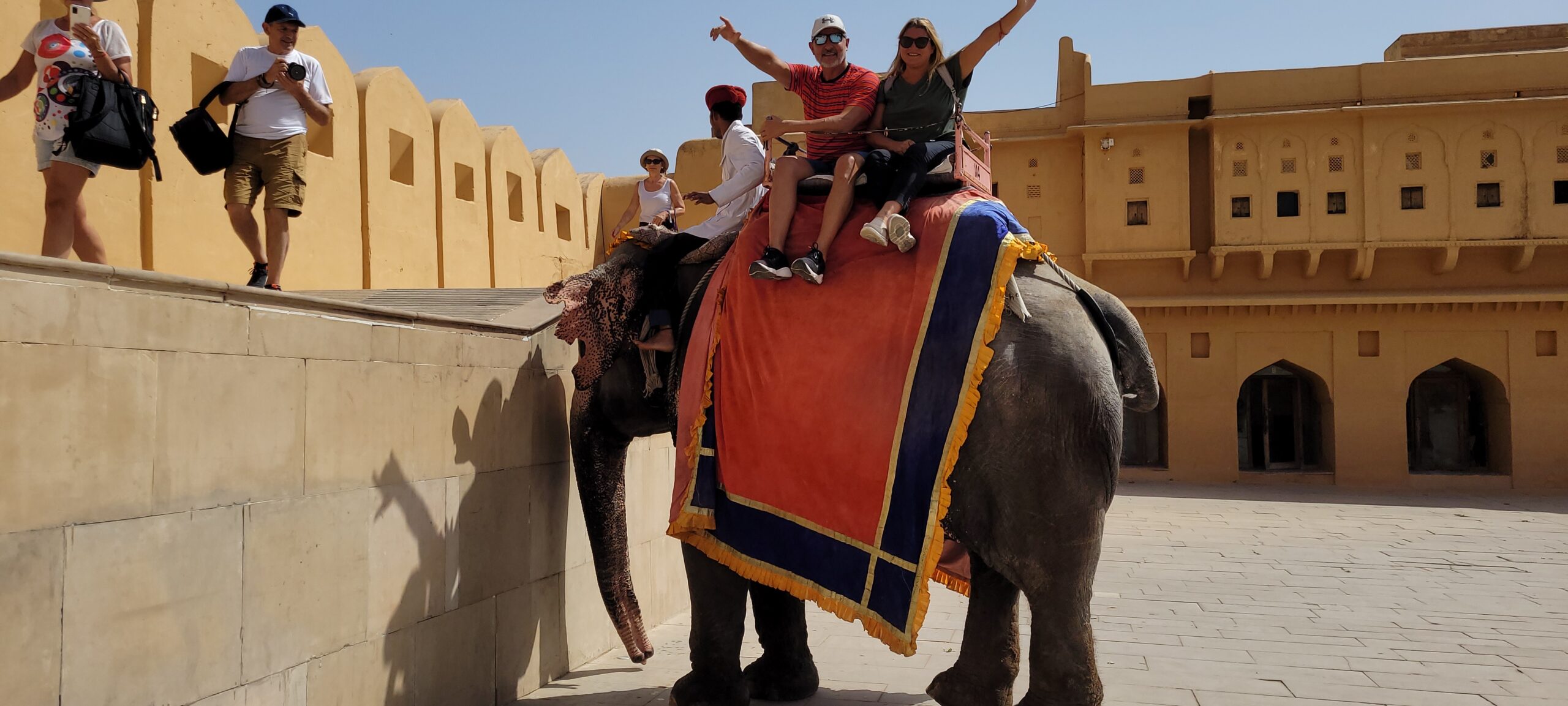
Proceed for a morning excursion to Amber Fort after breakfast. Elephant ride ascent to the fort.
AMBER FORT PALACE - Amber is the classic romantic Rajasthani fort palace. Its construction was started by Man Singh I in 1592, and completed by his descendent Jai Singh I. Its forbidding exterior belies an inner paradise where a beautiful fusion of Mughal and Hindu styles finds its ultimate expression.
Then click photos near Jal Mahal (Water Palace).
Later proceed for the sightseeing tour of Jaipur visiting...
CITY PALACE - A delightful blend of Mughal and traditional Rajasthani architecture, the City Palace sprawls over one-seventh of the area in the walled city. It houses the Chandra Mahal, Shri Govind Dev Temple and the City Palace Museum.
JANTAR MANTAR - This is the largest and the best preserved of the five observatories built by Jai Singh II in different parts of the country. This observatory consisting of outsized astronomical instruments is still in use.
HAWA MAHAL - The ornamental facade of this "Palace of Winds" is a prominent landmark in Jaipur. It is a five-storey structure of sandstone plastered pink encrusted with fine trelliswork and elaborate balconies. The palace has 953 niches and windows. Built in 1799 by Pratap Singh, the Mahal was a royal grandstand for the palace women.
This afternoon is free for you to relax shop or explore independently. Shopping is superb in Jaipur, particularly for gold and silver jewellery, pottery, tie-dye materials, silk, saris, wooden handicrafts and carpets.
In the evening, proceed to enjoy traditional Rajasthani meal experience. Overnight will be at Jaipur.
Enjoy breakfast at the hotel.
Check-out and drive to Pushkar.
Pushkar is one of the most popular vacationer destinations of Rajasthan. Surrounded by a pleasant valley, beautiful sceneries and exceptional unique destinations, Pushkar is a renowned tourist destination. It is also one of the most popular destination for the Hindus as it houses the most prominent temple devoted to Lord Brahma on the planet. The stream of visitors to Pushkar is at an all-time high especially during the camel fair. Local people here are exceptionally friendly and they spruce up with their best amid this much-anticipated camel fair. Their bright cover, turbaned heads, and brilliantly coloured skirts, with hints of the ektara and the profound tunes of the Rajasthani melodies make the evenings of the Pushkar delightful. Stroll through the town of Pushkar to enjoy and explore its brilliance. Other than some beautiful destinations, there are in excess of 400 temples here that draw in visitors towards this place each year. A portion of the heavenly places that you should make a point to visit while in Pushkar are the Brahma Temple, the Savitri Temple, Gau Ghat, Nag Hill, Pap Mochini Temple, Markendeya Rishi Ashram, Agastya Muni Ashram and Gaya Kund. Also spend evenings in the beautiful Pushkar Lake, and Pushkar Bazaar.
Overnight will be in Pushkar.
After breakfast, proceed for Udaipur. Reach and check in at hotel.
The city of Dawn, Udaipur is a lovely land around the azure lake, hemmed in by the lush hills of the ARAVALLIS. A vision in white drenched in romance and beauty, Udaipur is a fascinating blend of sights, sound and experiences and inspiration for the imagination of poets, painters and writers.
Its kaleidoscope of fairy-tale palaces, lakes, temples, gardens and narrow lanes strewn with stalls, carry the flavor of a heroic past, epitomizing valor and chivalry. Their reflection in the placid waters of the LAKE PICHOLA is an enticing sight.
Udaipur is the jewel of MEWAR -a kingdom ruled by the SISODIA dynasty for 1200 Years.
Evening will be free for you to visit the nearby markets or spend a relaxed time at a hotel/resort.
Overnight will be at Udaipur.
Breakfast will be at hotel.
Proceed for sightseeing tour of Udaipur, stopping first at City Palace.
City Palace: Standing on the east bank of Lake Pichola, is a massive series of palaces built at different times from 1559 A.D. The balconies of the palace provide panoramic views of "Jag Niwas" (the world wide famous Lake palace hotel), Jag Mandir on one side and on the other the city of Udaipur. Its main entrance is through the triple-arched gate - the Tripolia, built in 1725. The way now leads to a series of courtyards, overlapping parations, terraces, corridors and gardens - a harmonic profusion hard to describe. There is a Suraj Gokhda, where the maharanas of Mewar presented themselves in the times of trouble to the people to restore confidence. The Mor-chowk (Peacock courtyard), gets its name from the vivid mosaics in glass decorating its walls. The chini chitrashala is noteworthy while a series of wall paintings of KRISHNA are on display in Bhim Vilas. There are numerous other palaces such as Dilkhush mahal, Sheesh mahal, Moti mahal and Krishna vilas - in memory of a princess of striking beauty who poisoned herself to avert a bloody battle for her hand by rival princess. Now the palace contains many antique articles, paintings, decorative furniture and utensils and attracts thousands of visitors every day.
Here you will marvel at rooms with mirrored walls and ivory doors, colored glass windows and inlaid marble balconies and the Peacock Courtyard.
Proceed for Motor launch cruise on the placid waters of Lake Pichola. From the boat you will be able to view the city of Udaipur as it rises majestically above the lake in the middle of the Rajasthan desert. Also visit the Jag Mandir Palace - the other island palace in the middle of the lake. Spend some time at the Jag Mandir Palace.
Back to City Palace by motor-boat and proceed for city tour of Udaipur.
Jagdish Temple:The temple is situated in the middle of the city. The temple of Jagannath Rai, now called Jagdish-ji, is a major monument and should be seen carefully. Raised on a tall terrace and completed in 1651, it is a tribute alike to the tenacity of its builders and the resilence of the art tradition it represents. It attaches a double storeyed Mandapa (hall) to a double - storied, saandhara (that having a covered ambulatory) sanctum. The mandapa has another storey tucked within its pyramidal samavarna (bell - roof) while the hollow clustered spire over the sanctum contains two more, non - functional stories. Lanes taking off from many of the sheharpanah (city wall) converge on the Jagdish Temple and walking leisurely through them brings you face with the many layers of the cultural palimpsest that Udaipur is. It was built by Maharana Jagat Singh Ist in 1651 A.D.
Saheliyon ki Bari: Maharana Sangram singh builds this in the mid 18th century. The 'garden of the maidens' brings to mind the lifestyle of the ladies of the court. The delightful gardens appear discreet and in impeccable taste. There are four pools with dainty kiosks, and all around are flowerbeds, lawns, pools and fountains protected by a series of walls and shady trees. The Foundation of the Sahelion ki Bari functions solely by water pressure and no pumps are used. The garden has a lotus pool, a sitting room decorated with paintings and glass mosaics. The whole ambience is flavored by the nostalgia of those beautiful bells enjoying themselves in a lavish aura.
Evening visit Bagore Ki Haveli to enjoy live Rajasthani traditional dance and Puppet show.
Bagore ki Haveli:This is a very congenial old building built right on the waterfront of Lake Pichola at Gangori Ghat. Amir Chand Badwa, the Prime Minister of Mewar built it in the eighteenth century. The palace has over hundred rooms and some very interesting display of costumes and modern art. The glass and mirror in the interiors of the Haveli delicate work and well preserved too. It also preserves a fine example of Mewar Painting on the walls of Queen's Chamber. The two peacocks made from small pieces of colored glasses are fine examples of glasswork. After the death Badwa the building became the property of Mewar State. It came to be occupied by Maharana Shakti Singh of Bagore who built the palace of the three arches also in 1878 and it acquired its name of Bagore-ki-haveli, the house of Bagore. After independence the structure lay in neglect until 1986 when it housed the West Zone Cultural centre. Enjoy Overnight will be at Udaipur.
Start for Jodhpur after breakfast en route visiting Ranakpur Temples.
The RANAKPUR TEMPLES, dating back to the 15th century have 200 pillars, none of which are alike, support its 29 halls. The Temple abounds with intricate friezes and sculptures. Includes visits to two more Jain temples and the Temple of the Sun God with its erotic sculptures.
Continue the drive to Jodhpur. Reach and check into the hotel.
Set at the edge of the Thar Desert, the imperial city of Jodhpur echoes with tales of antiquity in the emptiness of the desert. Once the capital of the Marwar state, it was founded in 1459 AD by Rao Jodha-chief of the Rathore clan of Rajputs who claimed to be descendants of Rama - the epic hero of the Ramayana. The massive 15th century AD Mehrangarh Fort looms on the top of a rocky hill, soaring 125 Mts. Above the plains. The city is encompassed by a high wall - 10 km long with 8 gates and innumerable bastions.
After wash and change, proceed to enjoy the sightseeing tour of the city.
Mehrangarh Fort: Situated on a steep hill, Mehrangarh fort is one of the largest forts in India. The beauty and the grandeur of numerous palaces in the fort narrate a saga of hard sandstones yielding to the chisels of skilled Jodhpuri sculptures. Mehrangarh Fort, spreading over 5 km on a perpendicular hill and looking down 125 meters, presents a majestic view on city horizon. It was built on advice of a saint in 1459 to establish an impregnable head-quarter. This Fort is one of the best in India with its exquisitely latticed windows, carved panels, elaborately adorned windows and walls of Moti Mahal, Phool Mahal and Sheesh Mahal. A collection of musical instruments, palanquins, royal costumes, furniture and the cannons on the fort's ramparts are well preserved.
Jaswant Thada:Close to the fort complex, lies Jaswant Thada. This 19th century royal cenotaph built in white marble in commemoration of Maharaja Jaswant Singh II and three other cenotaphs, stand nearby. The cenotaph of Maharaja Jaswant Singh holds the rare portraits of the rulers and Maharajas of Jodhpur. A visit inside the cenotaphs, with some villagers of the region, would bring forward the reverence they still hold for their brave kings.
Umaid Bhawan Palace: The romantic looking Umaid Bhawan Palace was actually built with the purpose of giving employment to the people of Jodhpur during a long drawn famine. The royal family of Jodhpur still lives in a part of the palace.Another part of the palace houses a well-maintained museum, displaying an amazing array of items belonging to the Maharaja and the royal family - weapons, antiques & fascinating clocks, crockery and trophies
Overnight will be in Jodhpur.
After breakfast, proceed for Jaisalmer. Reach and check into the hotel.
Rising from the heart of the Thar Desert like a golden mirage is the city of Jaisalmer. A commanding fort etched in yellow sandstone stands, with its awesome splendor, dominating the amber-hued city.
The city has an interesting legend associated with it, according to which, Lord Krishna – the head of the Yadav Clan, foretold Arjuna that a remote descendent of the Yadav Clan would build his kingdom atop the Trikuta Hill. His prophecy was fulfilled in 1156 AD when Rawal Jaisal, a descendent of the Yadav Clan and a Bhatti Rajput, abandoned his fort at Lodurva and founded a new capital – Jaisalmer, perched on the Trikuta Hill. His Yadav descent can be traced back to the Mahabharata and the Rajputs were famed for courage and gallantry.
Jaisalmer is studded with magnificent tourist haunts that encapsulates the vivacious culture of this lovely locale. It is laced with beautiful forts, sacred shrines, stately havelis reminiscent of the yester years, well stacked museums and a rippling lake.
Evening will be free for you to visit the nearby markets.
Overnight will be at Jaisalmer.
After a relaxed breakfast proceed for full day sightseeing tour of The Golden City - Jaisalmer. It is in the heart of the Great Indian Desert. Its temple, fort and palaces are all built of yellow stone. The city is a mass of intricately carved buildings, facades and elaborate balconies.
Visit the JAISALMER FORT – The oldest living Fort in the world. (This is the highlight of the tour)
The fort stands almost 30 metres over the city and houses an entire living area within huge ramparts. Walking through the narrow lanes is an experience worth savouring. It is approached through Ganesh Pol, Suraj Pol, Bhoot Pol and Hawa Pol. Also, within it are many beautiful havelies and a group of Jain temples dating from the 12th to the 15th centuries. The golden - yellow sandstone of Jaisalmer Fort, over 800 years old, crowns the Trikuta Hill. Within its walls, defended by 99 turrets, lies the old city, nearly a quarter of modern Jaisalmer. Seen from outside, the sight must be almost identical to what was seen by merchants on their overland camel caravans to central Asia. Once this desert outpost was an important gate for the trade route, and Jaisalmer grew wealthy on the proceeds. But the advent of commercial shipping relegated the town to relative obscurity. Known as SONAR QUILA, rising from the sand , the mega structure merges with the golden hues of the desert ambience and the setting suns in its most colourful shades gives it a fairy tale look. Its simply a magic, the bastions envelops a whole townships that consist of palace complex various security sources and the havelis of rich merchants carved with an incredibly light touch, several temples and the residential complexes of the armies and traders placed strategically on the trade route, from where the ancient caravans passed.
Enjoy the sightseeing of the following places out of which the JAIN TEMPLES are inside the fort.
NATHMAL KI HAVELI: Two architect brothers built it in the 19th century. Interestingly, while one concentrated on the right, the other concentrated on the left and the result is a symphony epitomising the side by side symmetry during construction. Paintings in miniature style monopolise the walls in the interior. Mighty tuskers carved out of yellow sandstone stand guard to the haveli.
SALIM SINGH KI HAVELI: This haveli was built about 300 years ago and a part of it is still occupied. Salim Singh was the prime minister when Jaisalmer was the capital of the princely state and his mansion has a beautifully arched roof with superb carved brackets in the form of Peacocks. The mansion is just below the hill and it is said that once it had two additional wooden storeys in an attempt to make it as high as the maharaja's palace, but the maharaja had the upper storey torn down.
PATWON JI KI HAVELI: This is one of the largest and most elaborate Haveli in Jaisalmer and stands in a narrow lane. It is five storeys high and is extensively carved. It is divided into six apartments, two owned by archaeological Survey of India, two by families who operate craft-shops and two private homes. There are remnants of paintings on some of the inside walls as well as some mirror work.
TAZIA TOWER: The delicate pagoda like Tazia Tower rises from Badal Mahal (Cloud Palace). Rising in its five-tiered splendor, with each storey graced by a delicately carved balcony, the tower is of historical significance. Muslim craftsmen built it in the shape of a Tazia and gifted it to their royal patron
GODI SAGAR LAKE: This tank, south of the city walls, once held the town water supply, and befitting its importance in providing precious water to the inhabitants of this arid city, it is surrounded by small temples and shrines. The beautiful yellow sandstone gateway arching across the road down to the tank is the Tilon-ki-Pol, and is said to have been built by a famous prostitute, Tilon. When she offered to pay to have this gateway constructed, the Maharaja refused permission under it to go down to the tank and he felt that this would be beneath his dignity. While he was away, she built the gate, adding a Krishna temple on top so that king could not tear it down.
JAIN TEMPLES: These fine Jain temples were built in the 12th to 15th century, within the Jaisalmer Fort. They are beautifully carved and dedicated to Rikhabdevji and Sambhavnathji. The Gyan Bhandar, a library containing some extremely old manuscripts, is within the temple complex.
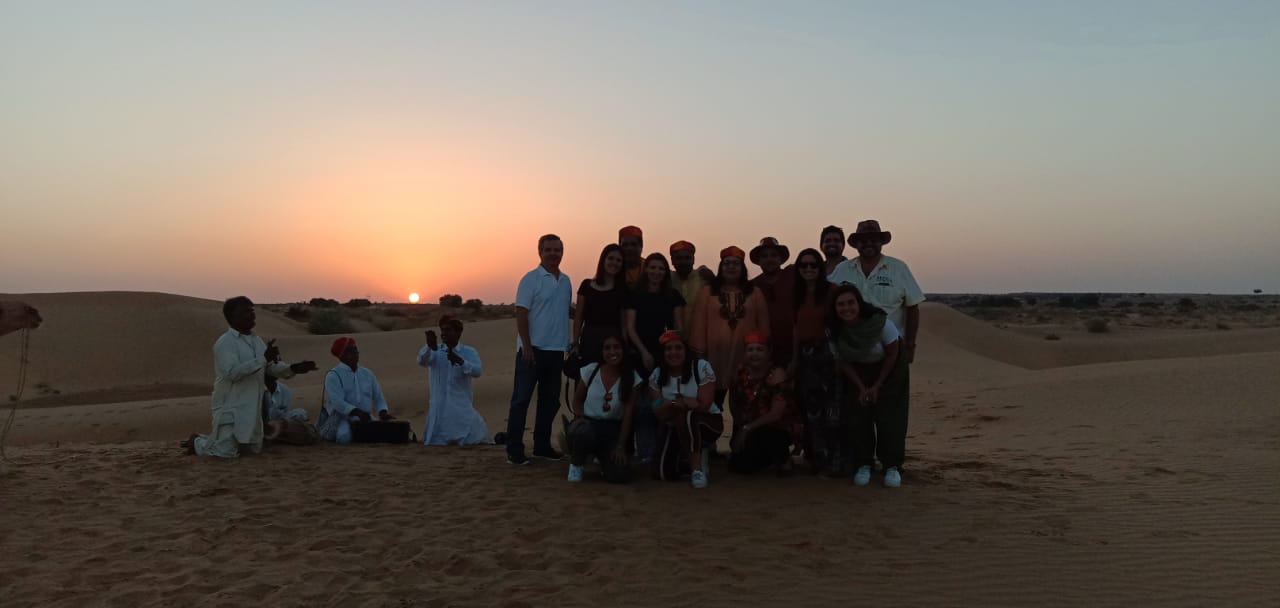
In the late afternoon, proceed to the SAND DUNES for visiting the typical Rajasthani Desert Village. View the sunset from the dunes, as the sky is set on fire. Return to the village for dinner amidst Rajasthani musicians playing haunting tunes. Overnight will be in Jaisalmer.
Breakfast will be at the hotel and then start for Bikaner. Reach and check into the hotel.
BIKANER – The royal fortified city with a timeless appeal. Lying in the north of the Desert State, the city is dotted with many sand dunes. Bikaner retains the medieval splendor that pervades the city’s lifestyle.
More popularly called the camel country, the city is renowned for the best riding camels in the world. The ship of the desert is an inseparable part of life here. Be it pulling heavy carts, transporting grains or working on wells, camels are the prime helpers. The wells of Bikaner - an important source of water are other attractions of the city. These are built on high plinths with slender minareted towers on each of the Four Corners and can be noticed even from a distance.
After wash and change, proceed for the sightseeing of
Rao Bikaji, a descendant of Jodhaji - the founder of Jodhpur, founded this desert town in the North of the state in 1488. Visit the Junagarh Fort, constructed between 1588 and 1593 by Raja Jai Singh, a general in the Moghul Emperor Akbar's army. The city is also called the “Camel Country”.
Visit the camel-breeding farm – the only one in Asia. Also visit the KARNI MATA TEMPLE.
Overnight stay will be at Bikaner.
After breakfast, proceed for Alsisar. Reach and check into the hotel.
Like the glint of silver, partially hidden in sand, Shekhawati in Rajasthan catches the eye of a discerning visitor, compelling a closer look. Once of the finest open air art galleries spreads its canvas in the streets and dwellings of real people, living real lives oblivious of the rich tradition of folk art splashed all over. Wizened old men and colorfully attired women peep from arched doorways and intricately carved windows, calling out to kind on the street where camel carts glide along.
Alsisar is Shekhawati is a convenient halt en route either form Jaipur or Delhi to the camel city of Bikaner and the 10th century desert fort of Jaisalmer. Established by Samrath Singh, descendent of the 15th century warrior Rao Shekhaji, Alsisar saw its heyday as trading caravans from Central Asia and Punjab traversed the sands to reach the sea ports of Gujarat in the West. The marwaris, India’s famed business families built exquisite mansions with walls three to six feet thick, courtyards fit to host games of soccer and temples that rival forts in scales. The array of fine murals are painted all over compete with the colors of turbans and odhnis (Women’s drape) to enliven the desert landscape. Even when businesses shifted, the marwaries continued to patronize this ancestral village still and the change of generation brought an inevitable indifference. The neglect, fortunately, did not last. The later part of the 20th century brought a rediscovery of this grand heritage making it once of the prime attractions in the Indian Desert Circuit.
The Shekhawati Experience
Indra Vilas, Alsisar is perfectly located as a jump off point for half or full day visit to the interesting spots of Jhunjhunu, Malisisar, Bissau, Ramgarh, Mandawa, bagar and Chirawa. Each of these town and villages are reposed with more of the bounty bequeathed by the past. That is, just in case the craving for more generated by Alsisar makes the heart skip many beats! For a wild experience the Tal Chapper wildlife sanctuary, two and a half hours away is the best place to observe the stately black bucks as 2000 of them graze in the scrub land. During the winters Demonisselle cranes from Silberia along with resident lizards and raptors are seen in fair numbers. Kallbelias or joinath community of snake charmers and other tribals inhabit the neighboring villagers.
Overnight will be in Alsisar.
Breakfast will be at the hotel. Proceed for Delhi.
As per the flight timings you will be transferred to the Delhi airport to take flight to Cochin.
WELCOME TO SOUTH PART OF INDIA.
TRAVELASTU REPRESENTATIVE will receive you on arrival at the airport and transfer to the hotel.
Chennai: The first British Warehouse came up in 1639 when the British acquired the sandy beach from the local Nayakas on lease. It was called Madraspatinam then. Later by 1654, the Fort St. George was built. Still later the neighboring villages were included in the city which came either as grants or gifts. Triplicane was rented from the Sultan of Golconda in 1676. In 1744 Robert Clive worked as a writer from the Fort, later to become a military man of British Army. The Fort House, which housed the Governor and his council, were added in the 17th Century, the Assembly Hall in 1910 and the Secretariat in 1925.
All the neighboring areas were merged into the city now known as Madras or as Chennai as it is officially known. Until Independence, Madras was the capital of what in British times was called the Madras Presidency, comprising nearly the whole of South India, including the Tamil, Telugu, Malayalam and Kannada speaking areas.
Overnight at Chennai.
Breakfast at hotel, proceed for city tour of Chennai:
Madras Synagogue: The Madras Synagogue is a Jewish congregation and synagogue. Completed in 1644, by Jacques de Paiva, a Paradesi Jew, it is the only synagogue in Chennai. Madras Synagogue was also known as the Esnoga, or Snoge; Esnoga means synagogue in Ladino, the traditional Judaeo-Spanish language of Sephardic Jews.
Santhome Cathedral: Built by Portuguese in the 14th and 15th century, this Cathedral is named after St. Thomas. Historically important, it is one of the pilgrimages for the Christian community.
Fort St. George: It is one the first few bastions built by the east India company, marks the beginning of Chennai as a modern city. It occupies a place of pride and prominence in Chennai. This bastion achieved its name from St. George, the patron saint of England. The state legislature and the secretariat are located in Fort St. George. It houses the St. Mary's church the oldest Anglican Church in India which was built in 1680 and the tombstones in its courtyard are the oldest British tombstones in India. The Fort Museum, once a building that housed Chennai's first lighthouse, first commercial bank and first 'club', is now a well-kept repository of tangible memories of early Madras.
Kapaleeswarar Temple: Dedicated to Lord Shiva, Kapaleeswarar temple has inscriptions from the 13th century A.D. The temple 'Gopuram' (tower) is in the characteristic Dravidian style of architecture. The walls and pillars of temple have very delicate and intricate carvings which depict the scenes from Hindu mythology.
Overnight will be at Chennai.
After breakfast drive to Mahabalipuram enroute Kanchipuram.
Kanchipuram – is the ancient capital of the Pallavas famous as a city of 1000 Temples and still has 124 shrines. The first temple dedicated to Shiva was built in the 7th and 8th century and has paintings on the walls. Temples of Ekambaswara, Kailasanatha, Sri Kamakshi and Varadarajaswamy are of interest. Kanchipuram is also famous for its silks. Lunch at local restaurant and later drive to Mamallapooram.
Also visit…
Dakshinachitra: Madras Crafts Foundation founded it for the promotion and preservation of the culture of the diverse people of Tamil Nadu, Andhra Pradesh, Karnataka and Kerala. Its worth for all tourists to visit here to understand about many aspects of South Indian lifestyle and culture
Continue the drive to Mahabalipuram. Reach and check into the hotel.
A few miles south of Chennai, at Mahabalipuram, on the sandy shores of the Bay of Bengal, a beautiful group of rock-cut monuments evokes the past. This ancient seaport was once the main harbor and naval base of the great Pallava Empire and is today the site of an enchanting seaside assemblage of temples and shrines. It was well known in the 1st century known to Greek traders, and was the Pallava’s second city. Though their power waned nearly 1200 years ago, they left a breathtaking legacy in four distinct kinds of sculpture, rathas (temple chariots), bas-relief sculptural panels, rock-cut caves, and free standing temples.
Seventh-century carvings of the Pallava dynasty include a series of freestanding boulders carved to resemble small temples and animals. Rock – cut caves and a masterful stone bas-relief are nearby. The 'Penance of Arjuna' relief, cut on two huge rocks, shows scores of figures of deities, people and animals including, according to one interpretation, the emaciated figure of Arjuna, the great warrior of the Mahabharata, standing on one leg and doing penance, praying to Lord Shiva for the strength to destroy his enemies. Sadhus of today perform this exact act of sacrificial devotion. On the adjacent beach stands one of South India's oldest temples, the Shore Temple, its foundations washed for twelve centuries by the frothy sea.
Overnight will be at Mahabalipuram.
After breakfast, proceed for the full the city sightseeing which will include a visit to
CAVES: There are nine rock-cut temples. The Mahishasuramardhini cave, depicting the goddess fighting a demon on one side and Lord Vishnu's cosmic sleep on the other, is a particularly remarkable one.
KRISHNA MANDAPAM: A bas-relief, notable for its realistic representation. The panel relates to one of the stories of Lord Krishna.
ARJUNA’S PENANCE: This is the world's largest bas relief measuring 27m X 9m. This huge whale-backed rock contains figures of gods, demigods, men, beasts, birds and almost all of the entire creation. And, this is easily the pride of Mamallapuram.
THE FIVE RATHAS: There are the five monolithic temples, each created in a different style. They are also known as the Pancha Pandava Rathas – and four out of the five rathas are supposed to have been carved out of a single rock.
THE SHORE TEMPLE: This is one of the oldest temples. Unique about this temple is the fact that it houses shrines for both Lord Shiva and Lord Vishnu. This belongs to the early 8th century AD and it is a classic example of the first phase of structural temples constructed in pure Dravidian style.
Evening will be at leisure.
Overnight will be at Mahabalipuram.
After breakfast drive to Pondicherry.
On the way visit India Seashell Museum: Asia's Largest Shell Museum. Collection of approximately 40,000 seashells & marine fossils from around the world.
French dreams of an Indian Empire began and ended in Pondicherry. But in the scattered territories of the Union Territory of Pondicherry there remains what little there is left of the French influence in India and that makes the territory, especially its headquarters, Pondicherry, unique, something quite different from the rest of India. The Union Territory of Pondicherry comprises of 4 coastal regions of Pondicherry, Karaikal, Mahe and Yanam. Pondicherry is on the east coast about 162 km south of Chennai (Madras) located on the Coromandel Coast of the Bay of Bengal.This erstwhile French colony on the east coast of South India merged with the rest of the country in 1954. Legend says that Pondicherry is the place where St. Agasthaya settled down.
Reach and check into the hotel.
Evening will be free for you to spend a relaxed time at the nearby beach. Overnight will be at Pondicherry.
After breakfast, proceed for the sightseeing of
Aurobindo Ashram is also known as “the city of dawn”. The place is 10 km north of Pondicherry. This ashram promotes Shri Aurbindo's ideas in bringing about a synthesis of Yoga and modern science, so as to unite the spirit and matter. Auroville - a unique experiment in international living and in creating a new environment where men and women of all nationalities live together in harmony. Also visit the hand-made paper factory.
Manakula Vinayagar Temple: This ancient Ganesha temple is a popular pilgrimage site and tourist destination, known for its intricate golden carvings and for predating French occupation.
Later proceed for a visit to Auroville. Auroville is the brainchild of The Mother, “an experiment in International living where people could live in peace and progressive harmony above all creeds, politics and nationalities”. In the world of Mother, the founding vision of Auroville is that “There should be somewhere upon earth a place that no nation could claim as its sole property, a place where all human beings of goodwill, sincere in their aspiration, could live freely as citizens of the world’.
Evening visit to spend time near beach. Overnight will be at Pondicherry.
Proceed for Tanjore after breakfast. Reach and check into the hotel.
Tanjore or Tanjavur as it was earlier called, was the capital of the Chola empire from the 10th century to the 14th century A.D. later is become part of the vijaynagar kingdom, then passed into the hands of the Marathas and later still went to the British. For ages it has been the chief political. Literary and religious centre of the South. The celebrated temple Brihadeshra built by the Chola King during the 11th century is its major attraction. The Saraswati Mahal library, dating back from the time of the Marathas, containing a rare collection of books and manuscripts on paper and palm leaves. The home of carnatic music, musical instruments, dance, and the traditional Handicrafts. Tanjore is famous for the lord Brahadiswara temple {lord Siva}. Tanjore is the rice bowl of India. It is well contacted by air, train, and road transport.
After wash and change, proceed for the sightseeing of -
Brihadeshwara Temple or Big temple: The Brihadeeswara Temple is the main attraction of Tanjore. The massive temple built by Raja Raja Chola reflects the Cholas’ contribution to the development of arts in this area. It is also regarded as the Chola dynasty's finest contribution to the Dravidian temple architecture. Listed as a World Heritage site, the temple is visited by a large number of people for the regular worship here. The temple is characterised by its unique structure. Unlike the usual South Indian temples, the Brihadeeswara temple has a soaring vimana and a stunted gopuram. It was constructed from a single piece of granite weighing an estimated 80 tonnes and the dome was hauled into place along a 4 km earthwork ramp in a manner similar to the Egyptian pyramids. A huge Nandi, about 6 m long and 3.7 m high, faces the inner sanctum. The statue of Nandi was created from a single rock piece and weighs 25 tonnes. It is in fact one of the largest statues of Nandi bulls in India. The temple also has a spacious ground, number of pillared halls, shrines and 250 lingams.
The Palace: The Palace of Tanjore also makes an important tourist destination. The royal Palace near the massive Brihadeshwara temple is characterized by its vast corridors, large halls, shady courtyards and observation and arsenal towers. Built by the Nayak in the mid-16th century, the Palace was completed by the Marathas. The Durbar Hall of the palace still retains the grandeur of the bygone era. The palace also functions as a Royal Museum housing a diverse collection of royal remnants, compilations of the early 19th century, the king’s slippers, head dresses and hunting tools.
Saraswathi Mahal Library: Located just by the side of the art gallery, the Saraswati Mahal Library has a huge collection of about 30,000 palm leaf and paper manuscripts in Indian and European languages. It also has some Tamil works including treatises on medicine, and commentaries on works from the Sangam period. It was built during 1700 AD. You can visit the nearby museum that houses some interesting exhibits like the entire range of the Ramayana written on palm leaf. Checkout the time and entry fee before you visit the Saraswati Mahal library
The Art Gallery and the Saraboji Palace: The Art Gallery is another must see of Tanjore. It has a rich collection of 250 Chola Bronze statues and 150 stone statues dating from the 9th to 12th century. These statues belong to the many groups namely the Bhairava, Umasahita Shiva, Kali and the Rama Lakshmana. You can have a look at all these wonderful collections by paying a nominal entry fee. large and excellent collection of chola bronzes, granite pieces. look for bhairavas, umasahista Siva, kali, somaskandha and the Ramalakshmana group.
Overnight will be at Tanjore.
After breakfast, proceed for Trichy.
Trichy, also known as Tiruchirappalli, is famous for its historical and religious significance, particularly its temples and ancient architecture. The city is renowned for the iconic Rockfort Temple, Sri Ranganathaswamy Temple in Srirangam, and the Grand Anicut (Kallanai), one of the oldest dams in the world. Trichy is also known for its industrial units like BHEL and HAPP, its traditional crafts such as brassware and silk sarees, and its delicious South Indian cuisine.
After completing Trichy sightseeing, back to Tanjore. Night stay in Tanjore.
After breakfast, proceed for Madurai, Reach and check into the hotel.
One of South India's great temple towns, Madurai is synonymous with the celebrated Meenakshi Temple. Situated on the banks of river Vaigai, Madurai has a rich cultural heritage passed on from the great Tamil era more than 2500 years old. Madurai was an important cultural and commercial centre even as early as 550 AD. Madurai was the Capital city for the great Pandyas kings. Tamil & Greek documents record the existence of Madurai from the 4th Century BC. The city was known to the Greeks through Magathenes who was their ambassador to the court of Chandraguptha Mauriya. This city was popular in trade especially in spices. It was also the site the Sangam the academy of the Tamil Poets. And Madurai is the centre of all the cities and Madurai is famous for the cotton Sungudi Saris.
Madurai’s Main attraction is the Famous Sri Meenakshi Amman temple a riotously baroque example of Dravidian architecture with Gopurams carved from top to bottom in a breathtaking profusion of multicolored images of Gods. Sri Meenakshi Amman temple dates back to 2000 Years back and designed in 1560 by Vishwanatha Nayaka and built during the reign of Tirumalai Nayaka. The Temple occupies an area of six hectares. There are 12 temple towers (Gopurams). The outer towers are the landmarks of Madurai. The enormous temple complex is dedicated to Shiva, known here as Sundareshvara and his consort Parvati or Meenakshi. Kulasekara Pandyas, but the entire credit built the original temple for making the temple as splendid as it is today goes to the Nayaks. The Nayaks ruled Madurai from the 16th to the 18th century and left a majestic imprint of their rule in the Meenakshi - Sundareswarar Temple. The temple complex is within a high-walled enclosure, at the core of which is the two sanctums for Meenakshi and Sundareswarar, surrounded by a number of smaller shrines and grand pillared halls. The impressive GOPURAMS (towers) rise from solid granite bases, and are covered with stucco figures of deities, mythical animals and monsters painted in vivid colors.
Evening will be at leisure.
Overnight will be at Madurai.
After breakfast, enjoy the sightseeing of the temple town.
Thousand Pillar Museum: Located inside the temple and has a variety of collections.
Gandhi Museum: The Gandhi Memorial Museum is one of the distinct places to be visited in Madurai. This Museum is one of the rare living memorials of "The Father of India". The Museum is set in relaxing grounds and has a clear historical account of India’s struggle for Independence.
The Vishnu Temple: There is a Vishnu Shrine called Kudal Algar (Kudal is the former names this town) and it is said that Lord Vishnu came down to this place to give away Meenakshi to God Sundareshwara. The vimana or the tower of the god in the temple is of a very fine workmanship and is known as the Ashtanga Vimana. The Marriage of the Meenakshi is to have been celebrated on the day of Panguni Uttram generally occurring on the Full moon day of the month of Panguni (March – April). And is a very important Event in this place.
Thirumalai Nayak Palace: This Palace was built in 1636 by King Thirumalai Nayak with the help of an Italian Architect. The building we see today was the main Palace where the King lived. The original Palace Complex was four times bigger than the present structure. This palace consisted mainly of two parts, namely Swargavilasa and Rangavilasa. In these two parts, there are royal residence, theatre, shrine, apartments, armoury, palanquin place, royal bandstand, quarters, pond and garden. King Thirumalai Nayak celebrated festivals like Sceptre festival, Navarathri, Chithirai festival, Masi festival and the Float festival. He conducted daily dance and music performances in the palace. This palace was destroyed by his grandson Chokkanatha Nayak and the valuables were transferred to other places. During the British rule, in 1822, Lord Napier made several renovation works. Then the palace was utilized to house some officials of the judiciary and district administration. After independence, this palace was declared as a national monument and is now under the care of the Tamilnadu Archaeological Department.
Vandiyur Mariamman Teppakulam: Vandiyur Mariamman Teppakulam is a huge temple tank about 5 km east of the Meenakshi temple. The mandapam in the centre has an idol of Vigneshwara (Vinayaka). According to the Vedic History when the earth was being dug out from here to build the Thirumalai Nayakkar Mahal. So, the place attained sanctity and was converted into a teppakulam (tank). This enormous temple tank is fed by water brought from the Vagai through an ingenious system of underground Channels. King Thirumalai Nayak born in 'Poosa' Star so in commemorating the birth of the king “ Float Festival” is conducted in Tamil Month 'Thai' (Jan/Feb) in the tank in a colorful way, which attracts thousands of tourists.
Evening enjoy the SOUND & LIGHT SHOW. Overnight will be at Madurai.
Proceed for Periyar after breakfast.
The river Periyar is the longest river in Kerala. This is the only perennial river in South India with clean water. The river occupies an important place in the history of Kerala. In the Sangam age Tamil epics such as Chilapathikaram, 'Akananuru', 'Purananuru' etc much has been said about this mighty river, formerly known as the 'Choorni Nadi' or 'Thamraparni Nadi' (Sukasandesam -stanza 66). A land route existed in the Sangam age from Mussuris (present-day Kodungalloor) to Madurai, which passed near the banks of the river Periyar. The capital of the old Chera Empire presumably existed on the banks of the river Periyar. It is believed that there was a flood in the 4th century AD that severely damaged the areas along the Periyar and the people living there had to escape to safer locations, abandoning their homes and livelihoods. The flood of AD 1341 resulted in the closing of Kodungalloor port and the opening of a new port at Kochi. The huge landslide that began in the high ranges as a result of the heavy downpours sent massive flows of mud and sand which created an Island at the 'Azhimugham' of the Periyar which is now known as the Vyppin Islands.
In the evening visit the SPICE MARKETS.
Overnight will be at Periyar.
Leave the resort early in the morning (7:30 AM) for a bamboo rafting excursion in the river Periyar running through the National Park.
From the safety of the raft you can witness herds of wild elephants coming down to water and swim. The other prominent fauna to be seen are Tiger, Sambar, Barking deer, Mouse deer, Nilgiri Tahr, Wild Pigs, Wild dogs, Porcupine, Lion-tailed macaque, Malabar Squirrel, Flying Squirrel, Sloth Bear, Gaur and Black Langur (Monkey). Tigers and Leopards seldom come to the lakeside by day.
Return in the evening and visit the Spice plantations.
Overnight will be at Periyar.
Breakfast will be at resort.
Proceed towards Kumarakom enjoying the beauty of the traditional Kerala houses. You will also pass through rolling tea gardens and rubber plantations. Stop at a tea factory to see the tea - making process.
Reach Kumrakom, Check-into a traditional houseboat of Kerala Style and go on a leisurely backwater cruise along the lake on a thatched houseboat.
The backwaters act as a vital waterway for the transport of goods, people and their produce are often the only link between isolated villages and crowded towns. In Kerala, the total expanse of backwater stretches over 1500 km, with a network of 44 rivers, lagoons and lakes from north to south. Alleppey which forms the main part of this network has the peculiar geographical feature of having the water in level with the land. This gives the advantage of getting a closer look at the village life on shore while on a backwater ride.
Talk to the crew and sip your tea while enjoying the backwaters and seeing life pass by. The meals and refreshments will be served on the boat.
Overnight will be at Houseboat.
Cruise through the villages after breakfast. Disembark the boat at Alleppey.
Aleppey is one of the most important tourist centers in the state, with a large network of inland canals earning it the sobriquet "Venice of the east". These large networks of canals provide Alleppey its lifeline. Alleppey was one of the busiest centers of trade in the past with one of the best known ports along the Malabar Coast. Even today it retains its charm as the centre for Coir carpet industries and prawn farming. Alleppey the ideal headquarters for backwater tourism as well as for visits to the lovely church filled town of Kottayam, and the town of Aranmula, famous for its historic Aranmula Snake Boat Race which is an annual event.
Drive to Cochin. Reach and check into the hotel.
The eventful history of this city began when a major flood in AD 1341 threw open the estuary at Kochi, till then a land locked region, turning it into one of the finest natural harbors in the world. Kochi thus became a haven for seafaring visitors from all over the world and became the first European town-ship in India when the Portuguese settled here in the 15th century.
Proceed for a sightseeing tour of FORT COCHIN. A few interesting sites included in the tour are the Chinese fishing nets along the Vasco Da Gama Square, Santa Cruz Basilica, St. Francis Church, VOC Gate, Bastion Bungalow, Jewish Synagogue, Mattancherry Palace, etc.
Learn the operation of the interesting Chinese fishing nets erected on teak wood and bamboo poles which work on the principle of balance. Records say they were first set up here between AD 1350 and 1450.
Vasco Da Gama Square, the narrow promenade that parallels the beach, is the best place to watch the nets being lowered and pulled out of the sea.
After wash and change, proceed for the half day sightseeing of
Old Cochin area – this is one of the oldest Jewish communities in the world. The Jewish community traces its history to nearly 2000 years ago. In 1948 the community numbered 2500 and today there are fewer that 30 people. The community is still centered round JEWTOWN where you will visit its crown Jewel, the Paradesi Synagogue. Built in 1568 and reconstructed after a Portugese bombardment in 1662, the synagogue is distinguished by its tile roof and bell tower. The small synagogue is also known for its hand-painted, willow-patterned, blue and white Chinese floor tiles, and the many brass and crystal lamps that hang from the ceiling. Later visit the interesting International Pepper Exchange, also located in Jewtown.
Jewish Synagogue: The Jewish Synagogue, also known as Paradesi Synagogue, is a place of worship located in the old Jew Town within Mattancherry locality of Kochi and is the only one of the seven synagogues in the area still in use. This established in 1568, stands as the oldest functioning synagogue in Kerala.
Chinese Fishing nets: The Chinese fishing nets erected on teak wood and bamboo poles work on the principle of balance. Records say they were first set up here between AD 1350 and 1450. Vasco Da Gama Square, the narrow promenade that parallels the beach, is the best place to watch the nets being lowered and pulled out of the sea. Learn the operation of the interesting Chinese fishing nets erected on teak wood and bamboo poles which work on the principle of balance.
In the evening proceed for the Kathakali Dance performance (Traditional Dance of India from Kerala) and also Kalaripayattu (Martial Arts) live performance in Kerala Kathakali Center.
Overnight will be in hotel.
After breakfast, you will be transferred to the airport to board the flight.
NOTE: This last day program we will decide as per your international flight details.
Go back home with incredible memories of incredible India with Team Travel Astu. See you next time in North-East, Central India and West Part of India. Or you can plan Asian countries like – Nepal, Bhutan, Tibet, Maldives, Srilanka, Dubai, Malaysia, Singapore, Thailand, Bali etc with us.
Thank you very much.
TOUR ENDS!!
INCLUSIONS LIST
- ACCOMMODATION AT MENTIONED HOTELS,
- DAILY BREAKFASTS AT MENTIONED HOTELS/RESORTS/HOUSEBOAT,
- CITY SIGHTSEEING TOURS AS MENTIONED IN THE ITINERARY,
- AC VEHICLE FOR ALL TOURS, TRANSFERS & SIGHTSEEING AS PER THE ITINERARY,
- AC VEHICLE ON DISPOSAL,
- ENGLISH SPEAKING GOVERNMENT APPROVED LICENSE GUIDE AS MENTIONED IN DETAILED DAY TO DAY ITINERARY,
- MONUMENTS ENTRANCES TICKETS,
- ASSISTANCE AT THE AIRPORTS/ STATIONS ON ARRIVAL / DEPARTURE,
- RICKSHAW RIDE AT DELHI,
- OLD CITY WALKING TOUR,
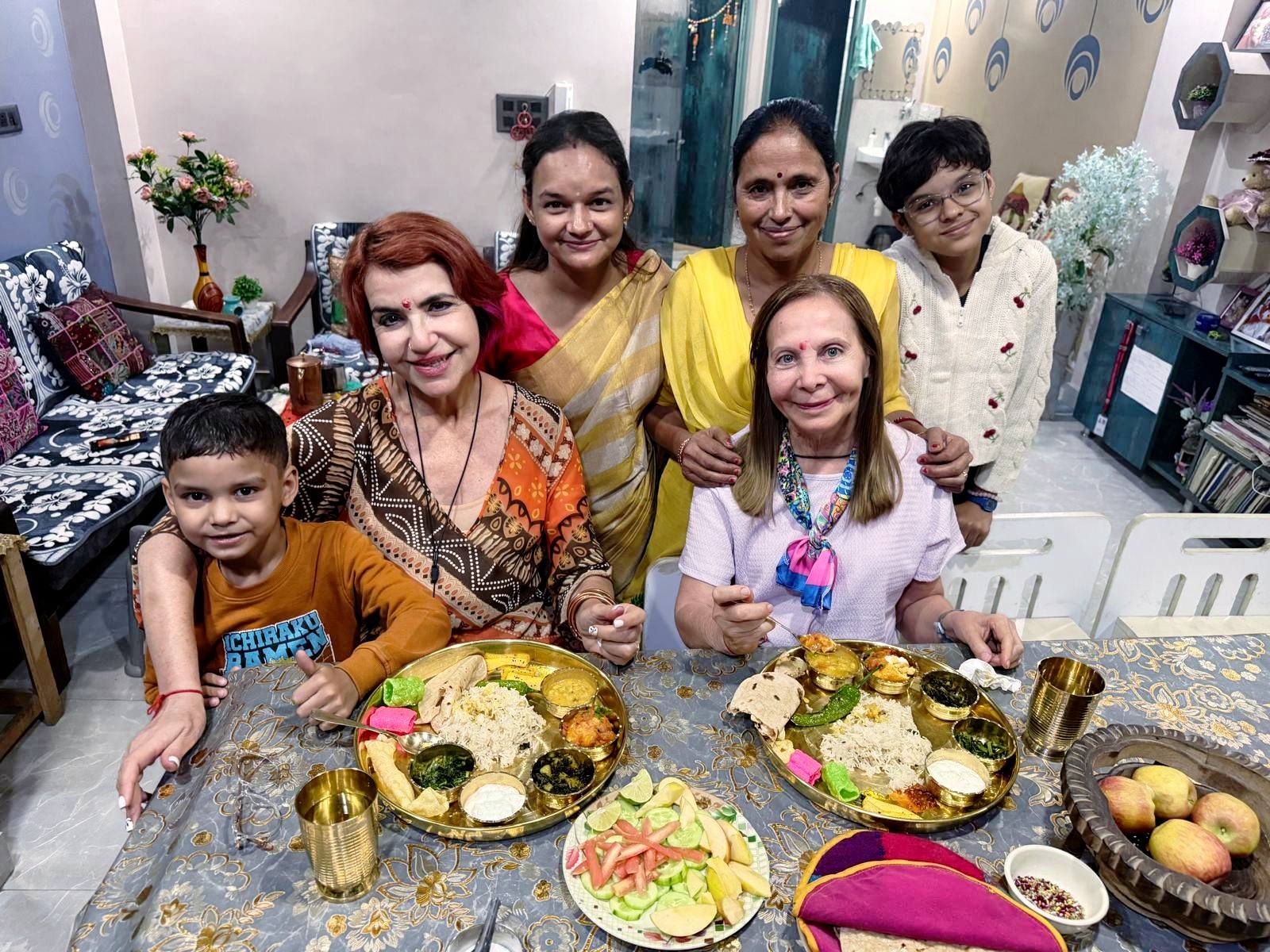
- ONE TRADITIONAL INDIAN DINNER WITH HINDU FAMILY AT THEIR HOME WITH THEIR FAMILY,
- VISIT ASIA’S LARGEST SPICE AND DRY FRUITS MARKET,
- E-CART RIDE AT TAJ MAHAL,
- SUNRISE TAJ MAHAL VISIT,
- ONE LUNCH IN AGRA,
- ENROUTE VISIT TO ABHANERI STEP-WELL VILLAGE,
- EVENING AARTI CEREMONY AT BIRLA TEMPLE IN JAIPUR,
- ELEPHANT RIDE AT AMER FORT - JAIPUR,
- ONE DINNER WITH LIVE RAJASTHANI DANCE AND MUSIC IN JAIPUR,
- BOAT-RIDE AT LAKE PICHOLA IN UDAIPUR,
- BAGORE KI HAVELI LIVE CULTURAL RAJASTHANI DANCE AND PUPPET SHOW,
- RANAKPUR TEMPLE TOUR,
- CAMEL RIDE WITH DINNER AT THE DUNES IN JAISALMER (ONE NIGHT DINNER),
- CAMEL BREEDING FARM IN BIKANER,
- VILLAGE WALK IN ALSISAR,
- FLIGHT TICKETS FROM DELHI TO CHENNAI INCLUDING 15+7 KG BAGGAGE PER PERSON X2,
- JEWISH SYNAGOGE VISIT OF DELHI, CHENNAI & COCHIN TO MEET YOUR BELONGINGS HERE IN INDIA,
- DAKSHINA CHITRA HERITAGE MUSEUM IN MUTHUKADU,
- INDIA SEASHELL MUSEUM VISIT,
- MAHABALIPURAM & PONDICHERRY BEACH VISIT,
- AUROVILLE VISIT,
- AUROBINDO ASHRAM VISIT AT PONDICHERRY,
- SOUND & LIGHT SHOW IN MADURAI,
- MADURAI MEENAKSHI TEMPLE EVENING AARTI CELEBRATION,
- FLOWER MARKET VISIT AT MADURAI,
- SPICE PLANTATION VISIT IN PERIYAR,
- TEA GARDENS VISIT,
- ONE NIGHT STAY IN TRADITIONAL BACKWATERS HOUSEBOAT OF KERALA,
- ALL THREE MEALS IN BACKWATERS HOUSEBOAT,
- BOAT RIDE THROUGH THE BIRD PARK IN KUMARAKOM,
- VILLAGE VISIT DURING HOUSEBOAT JOURNEY,
- PERIYAR NATIONAL PARK ENTRY FEE AND BOAT-RIDE CHARGES,
- KATHAKALI DANCE PERFORMANCE IN COCHIN,
- KALARIPAYATTU (MARTIAL ARTS) - KERALA KATHAKALI CENTER
- FISHING VILLAGE VISIT AT CHENNAI,
- ALL PLACES & MONUMENTS ENTRANCES FEE/TICKETS AS PER ITINERARY,
- ALL APPLICABLE TAXES AND SERVICE CHARGES,
- ALL ROAD TAXES, TOLL TAXES, PARKING, FUEL, DRIVER’S NIGHT STAY ALLOWANCE AND HIS FOOD.
EXCLUDES
- Please note that lunches and dinners are not included (2 lunch & 4 dinners are included) along with personal expenses, camera, etc. fees at places where applicable. Tips to driver not included and you can give tip as per your choice as tips is not mandatory, it’s person to person as per your happiness. 5% GST is extra. International airfare and visa is not a part of the tour package. Delhi to Chennai sector flight is included but if you want to include other domestic flight from day 28th or international flight, please tell us and we will include that also.
Tour Highlights
- The Rajasthan Circuit: Explore the "Blue City" of Jodhpur, the "Lake City" of Udaipur, and spend a starlit night in the Thar Desert at Jaisalmer.
- Architectural Wonders: Witness the symmetry of the Taj Mahal and the intricate step-wells of Abhaneri.
- Temple Grandeur: Marvel at the UNESCO-listed Shore Temple in Mahabalipuram and the spiritual energy of the Meenakshi Amman Temple in Madurai.
- Colonial Charm: Stroll through the bright yellow French Quarters of Pondicherry and the historic spice markets of Fort Kochi.
- Nature & Serenity: Trek through the Periyar wildlife sanctuary and enjoy a private luxury houseboat stay in the emerald backwaters of Kerala.
- Local Immersion: Experience a traditional Aarti ceremony in the holy city of Pushkar and the rural charm of Alsisar.
FAQ's related to this 28-day North and South India tour
Google Reviews
Trustindex verifies that the original source of the review is Google. Experiencia excelente y mejor recorrido. Muy bueno Astu Travel. Y genial nuestro guía Laky, muchas gracias por todo!!!Posted on GoogleTrustindex verifies that the original source of the review is Google. Muy buena experiencia con lky y travel astuPosted on GoogleTrustindex verifies that the original source of the review is Google. Muy buena experiencia, excelente recorrido junto a laky. Es un genio. Travel AstuPosted on GoogleTrustindex verifies that the original source of the review is Google. I travelled Goa with the help of Jay Rawat and it was one of the best trip. I highly recommend Jay Rawat and Astu for Goa tour.Posted on GoogleTrustindex verifies that the original source of the review is Google. Wonderful company - they looked after our every need when we toured the Golden Triangle a few weeks ago - the car was excellent for the journey and the driver made us very welcome and we were very confident of his wonderful driving skills - everyday he was spot on time to pick us up ffrom our hotel - always polite and very well presented - the wonderful welcome at Delhi airport airport made the journey seem so worthwhile - this is a great family business run by caring kind and efficient people - use them for your India trip and you will not be disappointedPosted on GoogleTrustindex verifies that the original source of the review is Google. I travelled Delhi and Agra with Astu Travel and Mr. Jay planned everything as we requested. Thank you Jay. We will definitely book travel with you again and also share your contact to our familyPosted on GoogleTrustindex verifies that the original source of the review is Google. Laky. Contratar sus servicios Agencia Travel Astu fue la mejor decisión de nuestro viaje. Excelente experiencia en Delhi!! Nuestro guía Laky fue increíble, respondió a todas nuestras dudas con mucha paciencia. Además, su trato es cercano y amable, hizo que el día se pase volando. Valoramos la tranquilidad que nos transmitió; se encargó de toda la logística para que nosotros solo nos preocupáramos por disfrutar. Se nota que ama su trabajo y eso marcó la diferencia!! Muchas Gracias!!Posted on GoogleTrustindex verifies that the original source of the review is Google. Increíble experiencia! La atencion, amabilidad y experiencia de la empresa nos permitió pasar momentos magnigicos y conocer todo lo q queriamos y las sugerencias maravillosas. Laky, supero las mejores expectativas, amable, correcto, puntual, nos explico, cuido y atendió con particular esmero y cariño! Híper recomendable!!!Posted on GoogleTrustindex verifies that the original source of the review is Google. Tuvimos un hermosa llegada a India y a Nueva Delhi gracias al Guia Laky y a la agencia TRAVEL ASTU. Recomendadisimo. Habla español perfecto, nos tomó fotos geniales, y nos acompañó en todo momento.Posted on GoogleTrustindex verifies that the original source of the review is Google. Simplemente espectacular, Laky el mejor guia que se puede tener.