

Tour Overview
Step beyond the classic tourist trail on this enriched 6-day Golden Triangle expedition. While this journey features the world-renowned icons of Delhi and the Taj Mahal, it is uniquely designed to showcase the hidden architectural and spiritual gems of the Rajasthani countryside.
Your adventure bridges the Mughal grandeur of the North with the ancient engineering of the Abhaneri Stepwell and the mystical atmosphere of the Galta Ji "Monkey Temple." A defining soul of this program is an invitation to the Family Table India in Delhi. Here, you will transition from a traveler to a cherished guest, sharing an authentic Traditional Thali dinner and engaging in heartfelt cultural storytelling with a local Hindu family. From the symmetry of ancient wells to the sunset rituals in Agra, this 6-day tour is a masterclass in Indian history, faith, and hospitality.
Day to day itinerary
As per flight time TravelAstu representative & driver will be there on Delhi airport to receive you. He will be there with paging board of your name along with logo of Travel Astu so that you can easily recognize him. After receiving, they will transfer you to hotel.
Hotel check-in and relax.
Evening Activity: Indian Food Cooking Demonstration & Family Dinner - Experience an immersive cooking class with a local Hindu family at my home. My wife, my sister, and I warmly welcome you to join us for a special get-together. It is a wonderful opportunity to get to know one another and share stories while you learn the secrets of Indian spices and traditional recipes from my family. In addition to the culinary experience, my wife and sister will demonstrate how to drape a Sari (traditional Indian dress) and apply Henna Mehandi (intricate temporary tattoos made from natural herb leaves) on the ladies' hands. Enjoy learning about our culture and traditions before sitting down together to enjoy a delicious, authentic home-cooked dinner.
Night in Delhi.
Relax breakfast at hotel and then check-out and start Delhi tour. Visit -
LOTUS TEMPLE (Monday Closed) located in south of Delhi. It is lotus shaped and has rightly been given the name. It is made of marble, cement, dolomite and sand. It is open to all faiths and is an ideal place for meditation and obtaining peace and tranquillity. Its founder, Bahaullah (1817-1892), is regarded by Bahai as the most recent in the line of Messengers of God that stretches back beyond recorded time and that includes Abraham, Moses, Buddha, Zoroaster, Christ and Muhammad.
The tour also includes a drive past the imposing INDIA GATE, the PARLIAMENT BUILDING and the RASTRAPATHI BHAWAN (President’s residence).
Next stop would be the majestic HUMAYUN’S TOMB. Humayun died in 1556, and his widow Hamida Banu Begum, also known as Haji Begum, commenced the construction of his tomb in 1569, fourteen years after his death. It is the first distinct example of proper Mughal style, which was inspired by Persian architecture. It is well known that Humayun picked up the principles of Persian architecture during his exile, and he himself is likely to have planned the tomb, although there is no record to that effect.
SWAMINARAYAN AKSHARDHAM TEMPLE (Monday Closed) in New Delhi epitomizes 10,000 years of Indian culture in all its breathtaking grandeur, beauty, wisdom and bliss. It brilliantly showcases the essence of India’s ancient architecture, traditions and timeless spiritual messages. The Akshardham experience is an enlightening journey through India’s glorious art, values and contributions for the progress, happiness and harmony of mankind.
After Delhi tour, drive to Agra. Hotel check-in and relax. Night in Agra.
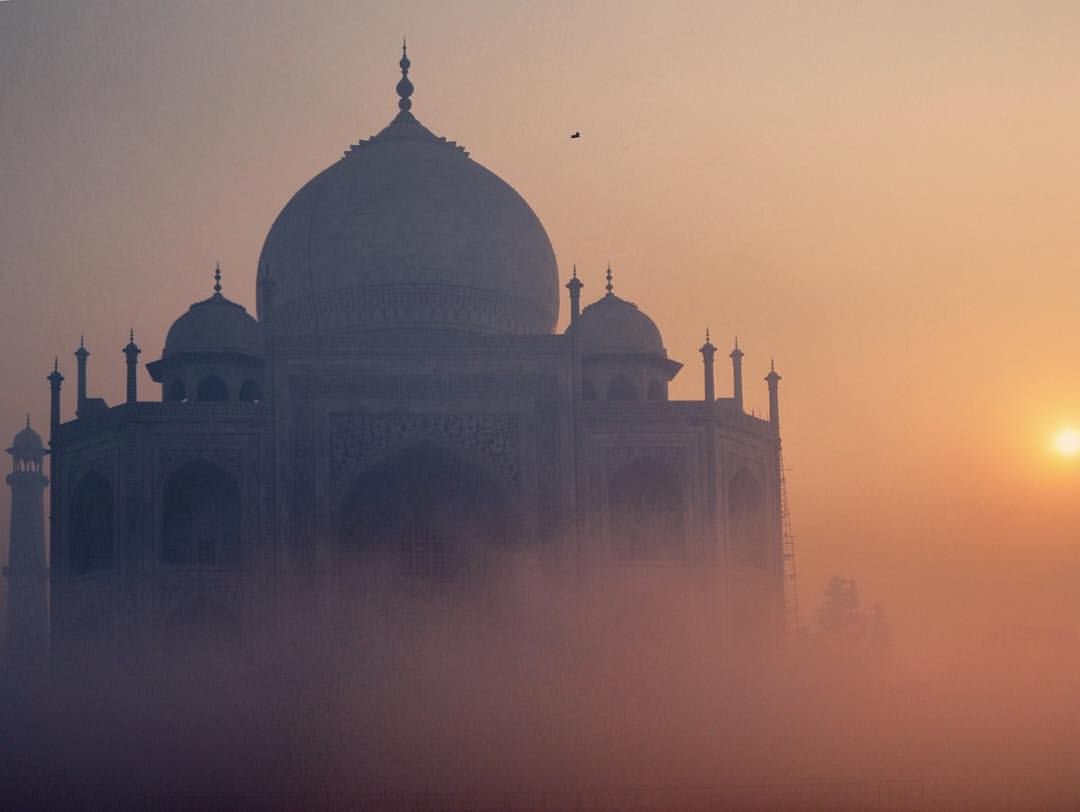
Early morning sunrise visit to Incredible Taj Mahal (6 AM). (Friday Closed)
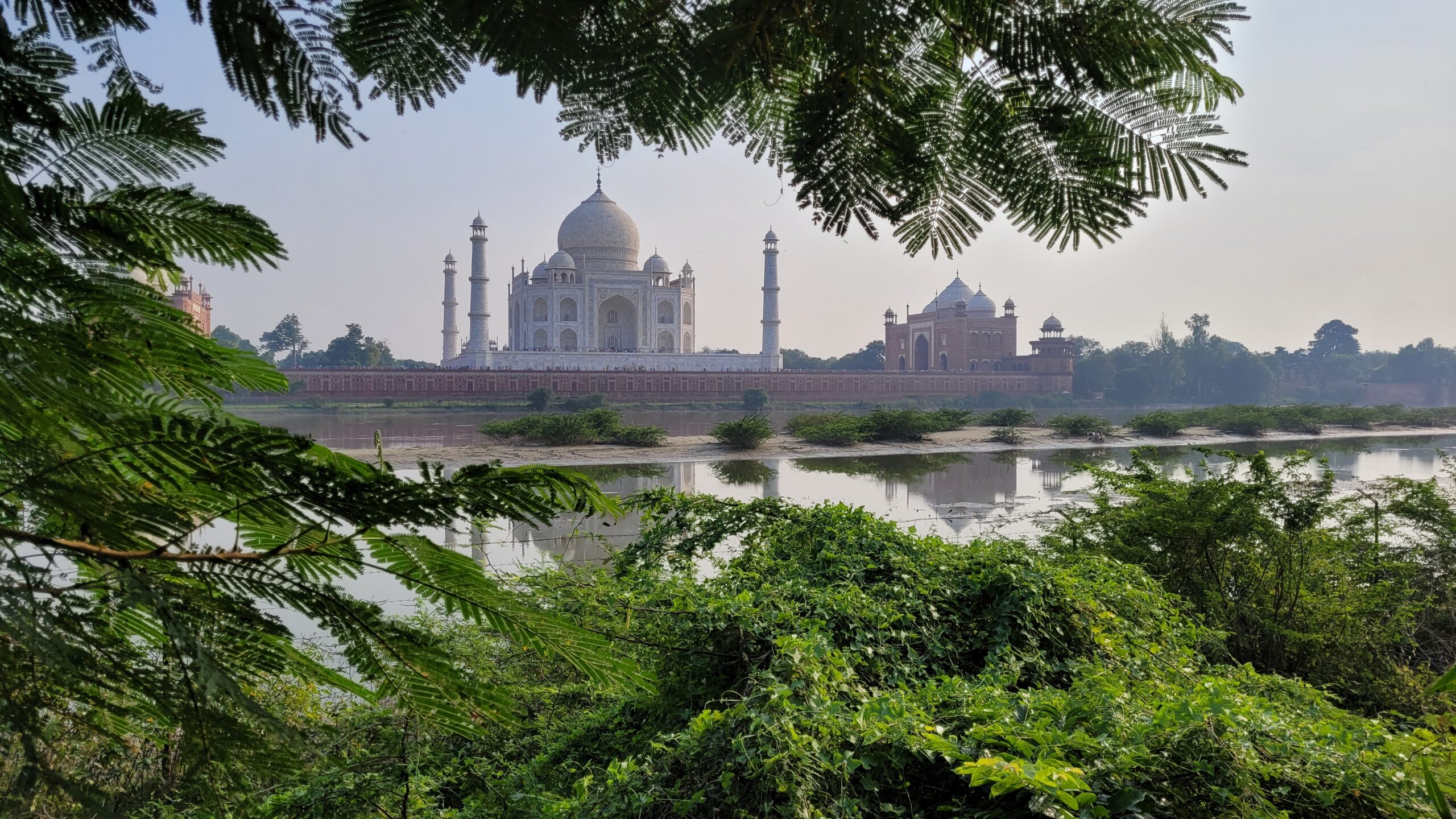
TAJ MAHAL - Little needs to be said about this architectural wonder which is always the soul raison-de-etre for every tourist's visit to Agra. Built by Shah Jahan, the Taj is a white marble memorial to his beautiful wife Mumtaz Mahal. This monument took 22 years to be completed and was designed, and planned by Persian architect Ustad Isa. Apart from its stunning design balance and perfect symmetry, the Taj is also noted particularly for its elegant domes, intricately carved screens and some of the best inlay work ever seen.
After Taj Mahal, back to hotel for breakfast, have breakfast.
After little relaxing, check-out and proceed for the sightseeing of Agra.
AGRA FORT – The red sandstone structure is surrounded by chahar-bagh, a four-square formal garden. Built by the famed Mughal emperor Akbar in 1565 AD, the fort is predominantly of red sandstone. Ensconced within is the picture-perfect Pearl Mosque, which is a major tourist attraction. It lies on the bend of the river Yamuna, almost in the heart of the town. Akbar built it as his citadel over the years 1563-73 in the finest architectural style. It has imposing gates and walls of red sandstone and a moat.
After Agra Fort, we will visit BABY TAJ or the ITMAD-UD-ULLAH – The interiors of which are considered better than the Taj. One of the most beautiful Mughal tombs, Itmad-Ud-Daulah's Tomb was built by Nur Jahan, the Empress of Jahangir for her father in 1628. The tomb is a resting place of the powerful personality in Mughal Court, Itmad-Ud-Daulah, whose life is very interesting. Formerly a very poor Persian merchant then named Mirza Ghiyas or Ghiyas Beg he became a minister and a trusted treasure in Akbar's court. After Akbar's death in 1605, his son Jahangir rose into power. Jahangir made Ghiyas Beg his chief minister and honored him with the title of Itmad-Ud-Daulah, the Pillar of State. Later, Jahangir met a beautiful daughter of Ghiyas Beg named Mehr-Un-Nissa and married her. Mehr-Un-Nissa soon played a significant role in the Jahangir's court and was called Nur Mahal, the light of the Place. Owing to her influence, her father and brother were granted with privileges in the court. When Ghiyas beg (Itmad-Un-Daulah) dies in 1622, Nur Mahal decided to build a mausoleum for him. Queen Mumtaz Mahal or the lady of the Taj was also from this prevailing family. The mausoleum is entirely made of white marble and graced with intricate decoration of inlay work, and marble-screen work belonging to the Islamic style. With its tranquil, small garden on the bank of Yamuna River, the tomb stands impressively elegant from a distance.
After finishing Agra tour, drive to Jaipur.
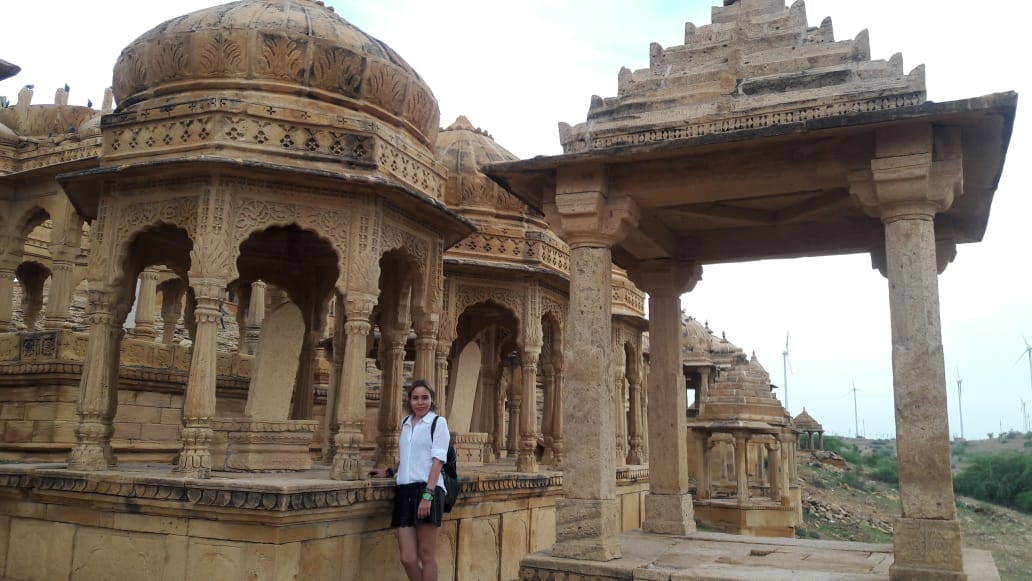
On the way visit ABHANERI CHAND BAORI STEPWELL VIALLAGE - Abhaneri, also spelled Abaneri, is a village in the Dausa district of the Indian state of Rajasthan. Abhaneri yields ruins of an ancient city, Abhangari, now popular for the Chand Baori step well and Harshat Mata Temple.
Then if time available visit MONKEY TEMPLE ON ARAVALI HILLS. Amazing geography and architecture, the temple is set in between the mountains. Best place in Rajasthan. You see the monkeys from up close and you can feed them.
Reach Jaipur, hotel check-in and relax.
Jaipur is the capital of the state of Rajasthan a romantic realm of resplendent palaces, mighty fortresses and regal Maharajahs that lies in the western deserts and is an utterly unique part of India. Proudly belonging to the KSHATRIYA warrior caste and fiercely independent, the Rajput princes made fearsome foes. However, many of them realized that to maintain their wealth and authority locally, it was expedient to proclaim allegiance to the central power. Thus, many enjoyed a privileged position under the Mughal emperors and also the British Raj that followed.
The bustling Rajasthan capital of Jaipur takes its name from its venerated founder Jai Singh II, who was given the title Sawai Maharaja by the Mughal. Literally translated this would mean ’one and a quarter’, suggesting that the Mughal thought this emperor to be more valuable than just ‘one’. Jaipur is known as the ’Pink City’ on account of the distinctive color of its buildings. This did not, however, form part of the original plan, but dates back to 1856, when the city was given a wash of pink in honor of a state visit from Prince Albert.
Night in Jaipur.
Breakfast will be at hotel. Proceed for a morning excursion will be taken to the Amber Fort.
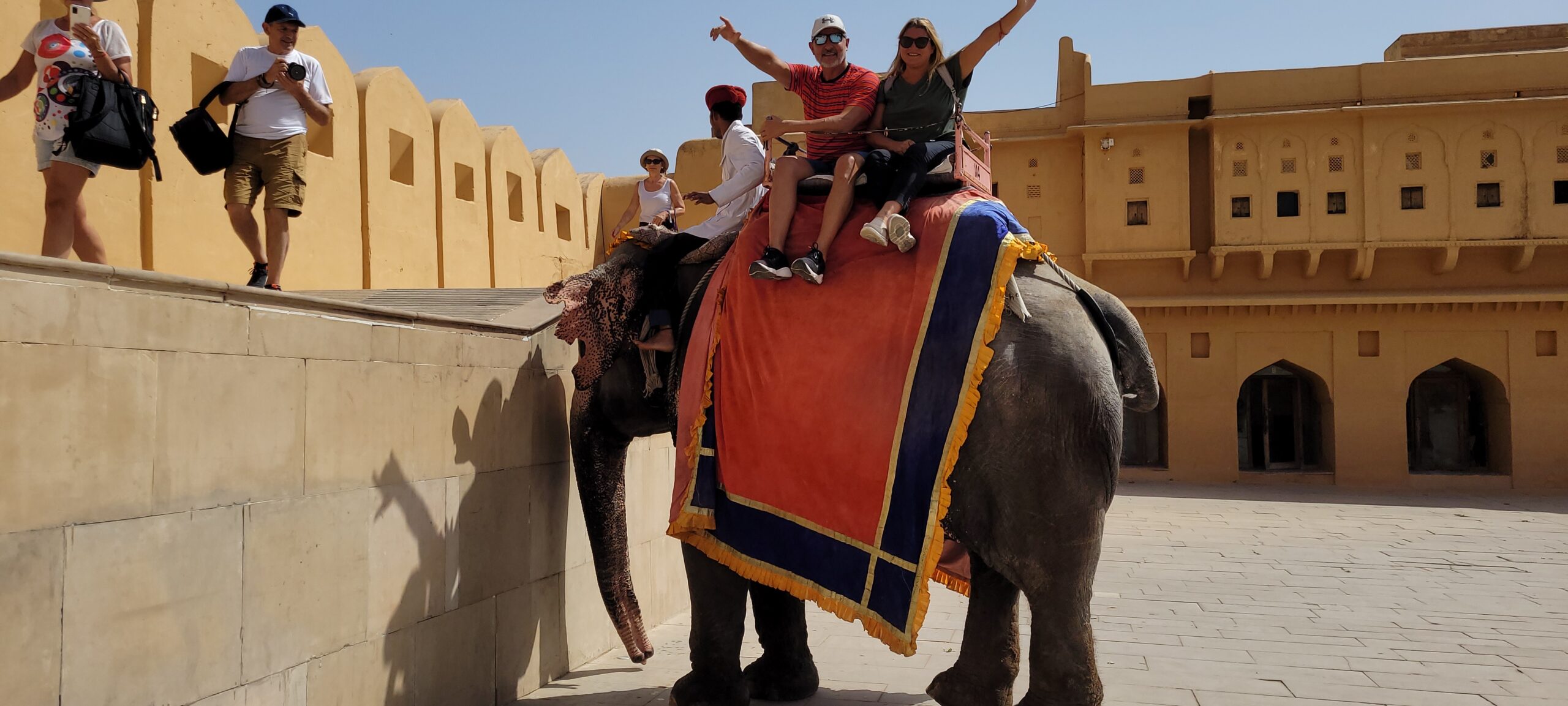
Enjoy the fort ascent on elephant back in a royal manner. (Elephant ride in Amber Fort, if you like to have. If not than we will take you directly to fort. )
AMBER FORT PALACE - Amber is the classic romantic Rajasthani fort palace. Its construction was started by Man Singh I in 1592, and completed by his descendent Jai Singh I.
Its forbidding exterior belies an inner paradise where a beautiful fusion of Mughal and Hindu styles finds its ultimate expression.
Also stop in JAL MAHAL (WATER PALACE) to click some photos.
CITY PALACE - A delightful blend of Mughal and traditional Rajasthani architecture, the City Palace sprawls over one-seventh of the area in the walled city. It houses the Chandra Mahal, Shri Govind Dev Temple and the City Palace Museum.
JANTAR MANTAR - This is the largest and the best preserved of the five observatories built by Jai Singh II in different parts of the country. This observatory consisting of outsized astronomical instruments is still in use.
HAWA MAHAL - The ornamental facade of this "Palace of Winds" is a prominent landmark in Jaipur. It is a five-storey structure of sandstone plastered pink encrusted with fine trelliswork and elaborate balconies. The palace has 953 niches and windows. Built in 1799 by Pratap Singh, the Mahal was a royal grandstand for the palace women.
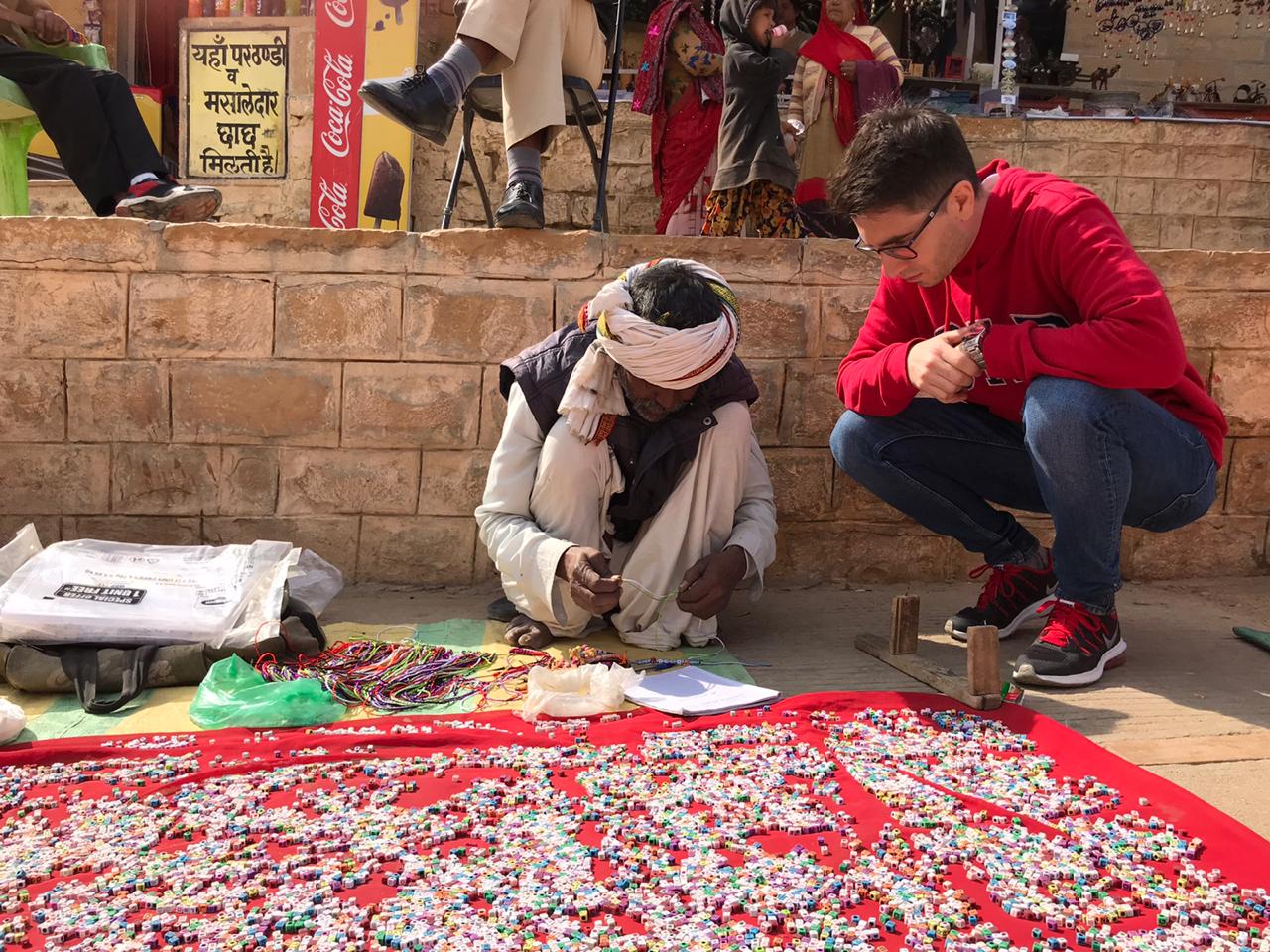
This evening is free for you to relax or explore independently. You can also visit local market of Jaipur. Shopping is superb in Jaipur, particularly for gold and silver jewellery, pottery, tie-dye materials, silk, saris, wooden handicrafts and carpets.
If you will be comfortable so we will take you to shopping of textile and jewelry.
Overnight in Jaipur.
Relax breakfast at hotel and then check-out and start Jaipur tour. Visit -
ALBERT HALL MUSEUM - The Albert Hall Museum in Jaipur is the oldest museum of the state and functions as the state museum of Rajasthan, India. The building is situated in Ram Niwas garden outside the city wall opposite new gate and is a fine example of Indo-Saracenic architecture. The museum is famous for its extensive collection of artefacts, paintings, sculptures, and other historical items that showcase the rich cultural heritage of Rajasthan. Its beautiful architecture, a vast collection of artifacts, and its central location in the city.
PATRIKA GATE: If you like, we will also take you Patrika Gate to do photography because it’s very famous between instagramer and photography lovers.
NAHARGARH FORT: Nahargarh Fort stands on the edge of the Aravalli Hills, overlooking the city of Jaipur in the Indian state of Rajasthan. Along with Amer Fort and Jaigarh Fort, Nahargarh once formed a strong defence ring for the city. The fort is known for its extended wall that connects it to Jaigarh Fort. The fort was originally named Sudarshangarh, but it became known as Nahargarh, which means 'abode of tigers'. Its magnificent architecture and the stunning view of the city that it offers.
After finishing Jaipur tour, drive to Delhi. Check-in hotel and relax.
Night in Delhi.
Breakfast at hotel.
Relax breakfast at hotel. After breakfast start Delhi tour.
The tour will begin with a visit to RAJ GHAT, a simple memorial to Mahatma Gandhi. He is also famously known as the “father of the nation”.
One of the most important buildings of Old Delhi is the RED FORT. The magnificent Red Fort was built during the years 1638 – 48 when the Moghul Empire was at its peak. In 1638 Shahjahan transferred his capital from Agra to Delhi and laid the foundations of Shahjahanabad, the seventh city of Delhi. It is enclosed by a rubble stonewall, with bastions, gates and wickets at intervals. Of its fourteen gates, the important ones are the Mori, Lahori, Ajmeri, Turkman, Kashmiri and Delhi gates, some of which have already been demolished. His famous citadel, the Lal-Qila, or the Red Fort, lying at the town's northern end on the right bank or the Yamuna and south of Salimgarh, was begun in 1639 and completed after nine years. The Red Fort is different from the Agra fort and is better planned, because at its back lies the experience gained by Shahjahan at Agra, and because it was the work of one hand. It is an irregular octagon, with two long sides on the east and west, and with two main gates, one on the west and the other on the south, called Lahori and Delhi gates respectively. While the walls, gates and a few other structures in the fort are constructed of red sandstone, marble has been largely used in the palaces.
Continue your tour to JAMA MASJID, one of Asia’s largest mosques. People stream in and out of the mosque continuously and the presence of a nearby bazaar means that the area is rarely quiet.
If you like, you can also visit Asia’s largest spice and dry fruit market in old Delhi.
After lunch proceed for a sightseeing tour of New Delhi, which reflects the legacy of the British left behind. The division between New and Old Delhi is the division between the capitals of the British and the Mughals respectively. The division in the walled city and New Delhi also marks the division in the life-styles. The walled city is all tradition where one will be able to glean a past life-style in all its facets, colors and spells. New Delhi in contrast, is a city trying to live up to the best of 21st century standards.
Imperial Delhi will include the QUTUB MINAR, the tallest stone tower in India. Qutb-Minar in red and buff standstone is the highest tower in India. It has a diameter of 14.32 m at the base and about 2.75 m on the top with a height of 72.5 m. Qutbu'd-Din Aibak laid the foundation of Minar in AD 1199 for the use of the mu'azzin (crier) to give calls for prayer and raised the first floor, to which were added three more floors by his successor and son-in-law, Shamsu'd-Din Iltutmish (AD 1211-36). All the storeys are surrounded by a projected balcony encircling the minar and supported by stone brackets, which are decorated with honeycomb design, more conspicuously in the first floor.
Then visit AGRASEN KI BAOLI STEPWELL.
We could even have time to see the INDIRA GANDHI MUSEUM or GANDHI MUSEUM. The history of the Gandhi family is well documented in Indira Gandhi Museum and all history of Gandhi ji in Gandhi Museum.
Night in Delhi.
Relax breakfast at hotel. As per your flight time, we will transfer you to Delhi airport for flight back home with sweet memories of north part of India with Team Travel Astu.
Tour Ends!!
INCLUSIONS LIST
- ACCOMMODATION AT MENTIONED HOTELS,
- DAILY BUFFET BREAKFASTS,
- COMPLEMENTARY WI-FI IN THE HOTELS,
- CITY SIGHTSEEING TOURS AND ALL TRANSFER AS MENTIONED IN THE ITINERARY BY AC PREMIUM VEHICLE,
- VISIT TO GALTA JI MONKEY TEMPLE ON THE ARAVALI HILLS AND ABHANERI STEP-WELL VILLAGE WITH DELHI, AGRA AND JAIPUR,
- DEDICATED AC VEHICLE AND DRIVER FOR ALL TRANSFERS & TOUR SIGHTSEEING AS PER THE PROGRAM,
- INDIAN FOOD COOKING DEMO WITH HINDU FAMILY DINNER,
- ONE DINNER WITH TRADITIONAL RAJASTHANI DANCE AND MUSIC IN JAIPUR,
- COMPANY ASSISTANCE IN THE AIRPORT TO RECEIVE YOU WITH PLA CARD OF YOUR NAME,
- DEDICATED 24/7 GUEST RELATION MANAGER ON CALL/WHATSAPP
- TOLL TAXES, CITY AND STATE TAXES, BATA, DRIVER’S ALLOWANCE & HIS FOOD, THIRD PARTY INSURANCE.
Tour Highlights
- The Imperial Capital: Explore the historic Red Fort and the bustling lanes of Old Delhi before retreating to a private home for a Family Table India cultural dinner.
- The Monument of Eternal Love: Witness the ethereal beauty of the Taj Mahal at sunrise, followed by a tour of the formidable red sandstone Agra Fort.
- Ancient Geometric Mastery: Descend into the depths of the 8th-century Chand Baori in Abhaneri, one of the world's deepest and most visually stunning stepwells.
- Sacred Mountain Springs: Discover the ancient Hindu pilgrimage site of Galta Ji, nestled between mountain cliffs and famous for its natural holy springs and resident monkey tribes.
- Pink City Architecture: Explore the intricate honeycomb facade of the Hawa Mahal and the royal heritage of the City Palace complex.
- Hilltop Fortifications: Ascend the majestic Amber Fort to marvel at the Hall of Mirrors and panoramic views of the Aravalli Hills.
- Cultural Immersion: For our female guests, enjoy a personalized Henna session and a traditional Sari-draping demonstration at a private Delhi residence.
- Professional Guidance: Benefit from a private vehicle on disposal and government-approved licensed guides in every city to ensure a seamless experience.
Frequently asked questions (FAQs)
This itinerary includes two significant off-the-beaten-path locations: Abhaneri, home to one of India's most incredible stepwells, and Galta Ji, a stunning temple complex tucked into the hills. It offers a deeper look into India's rural architecture and spiritual traditions.
Yes, it is perfectly safe. While the temple is famous for its large population of Rhesus macaques, your professional guide will ensure you navigate the complex comfortably. We recommend not carrying loose food items to ensure a peaceful visit.
The drive from Agra to Abhaneri takes approximately 2 hours. After exploring the stepwell, it is another 2-hour drive to Jaipur. We provide a premium air-conditioned vehicle to ensure your journey through the Rajasthani landscape is comfortable and scenic.
Our standard packages include the private vehicle, professional driver, and licensed guides. Monument entry fees are typically kept separate to give you flexibility, though we can easily include them in a pre-paid "all-inclusive" quote upon request.
All 12 months are fine but if you talking about best of the best time then the ideal time is from October to March when the weather is pleasant and cool, perfect for walking through the expansive forts of Agra and Jaipur and descending into the Abhaneri stepwell.
To provide the highest level of expertise, we provide specialized, government-licensed local guides in Delhi, Agra, and Jaipur. They have in-depth knowledge of their specific regional history and legends.
It is a professional yet warm cultural exchange. You are invited to a local family's home for a Traditional Thali dinner. You can participate in a cooking session to learn about Indian spices, and for female travelers, we offer Henna (Mehendi) art and a Sari-draping demonstration. Explore guest memories on the Family Table India Facebook Page.
We are always just a click away. Reach out via WhatsApp for a real-time chat, call our official helpline, or fill out the inquiry form below. Our team is ready to assist you with every detail of your upcoming India expedition to ensure it’s perfectly tailored to your needs.
Google Reviews
Trustindex verifies that the original source of the review is Google. Experiencia excelente y mejor recorrido. Muy bueno Astu Travel. Y genial nuestro guía Laky, muchas gracias por todo!!!Posted on GoogleTrustindex verifies that the original source of the review is Google. Muy buena experiencia con lky y travel astuPosted on GoogleTrustindex verifies that the original source of the review is Google. Muy buena experiencia, excelente recorrido junto a laky. Es un genio. Travel AstuPosted on GoogleTrustindex verifies that the original source of the review is Google. I travelled Goa with the help of Jay Rawat and it was one of the best trip. I highly recommend Jay Rawat and Astu for Goa tour.Posted on GoogleTrustindex verifies that the original source of the review is Google. Wonderful company - they looked after our every need when we toured the Golden Triangle a few weeks ago - the car was excellent for the journey and the driver made us very welcome and we were very confident of his wonderful driving skills - everyday he was spot on time to pick us up ffrom our hotel - always polite and very well presented - the wonderful welcome at Delhi airport airport made the journey seem so worthwhile - this is a great family business run by caring kind and efficient people - use them for your India trip and you will not be disappointedPosted on GoogleTrustindex verifies that the original source of the review is Google. I travelled Delhi and Agra with Astu Travel and Mr. Jay planned everything as we requested. Thank you Jay. We will definitely book travel with you again and also share your contact to our familyPosted on GoogleTrustindex verifies that the original source of the review is Google. Laky. Contratar sus servicios Agencia Travel Astu fue la mejor decisión de nuestro viaje. Excelente experiencia en Delhi!! Nuestro guía Laky fue increíble, respondió a todas nuestras dudas con mucha paciencia. Además, su trato es cercano y amable, hizo que el día se pase volando. Valoramos la tranquilidad que nos transmitió; se encargó de toda la logística para que nosotros solo nos preocupáramos por disfrutar. Se nota que ama su trabajo y eso marcó la diferencia!! Muchas Gracias!!Posted on GoogleTrustindex verifies that the original source of the review is Google. Increíble experiencia! La atencion, amabilidad y experiencia de la empresa nos permitió pasar momentos magnigicos y conocer todo lo q queriamos y las sugerencias maravillosas. Laky, supero las mejores expectativas, amable, correcto, puntual, nos explico, cuido y atendió con particular esmero y cariño! Híper recomendable!!!Posted on GoogleTrustindex verifies that the original source of the review is Google. Tuvimos un hermosa llegada a India y a Nueva Delhi gracias al Guia Laky y a la agencia TRAVEL ASTU. Recomendadisimo. Habla español perfecto, nos tomó fotos geniales, y nos acompañó en todo momento.Posted on GoogleTrustindex verifies that the original source of the review is Google. Simplemente espectacular, Laky el mejor guia que se puede tener.